Shock wave therapy: which conditions it is recommended for
Which conditions is shock wave therapy recommended for? Here is when to undergo the treatment with the physical therapist
Shock wave therapy: which conditions it is recommended for, and when to undergo the treatment. Shock waves are today one of the most effective and innovative tools in the treatment of many musculoskeletal conditions. First used in urology to break up kidney stones, they have quickly become established in physical therapy as well, thanks to their remarkable ability to stimulate tissue healing and reduce pain in a non-invasive way.
What shock waves are
They are high-intensity acoustic pulses that travel through tissues at very high speeds, faster than the speed of sound. Once they reach the area to be treated, these pulses produce a very intense mechanical and biological action that stimulates tissue regeneration, reduces inflammation and, above all, acts on pain.
The two types of shock waves
There are mainly two types of shock waves: focused and radial. The former act more deeply and precisely and are ideal for localized conditions, such as tendon calcifications. The latter, on the other hand, act in a more diffuse and superficial way and are particularly suitable for muscle pain or trigger points.
Their effect, however, is always twofold: mechanical, because they directly stimulate the tissues, and biological, because they activate cellular processes that promote repair and well-being. In addition, their regular use stimulates local vascularization, improves cellular metabolism and triggers the production of natural pain-relieving substances.
Which conditions shock wave therapy is recommended for
Shock waves are particularly effective when working on chronic, inflammatory or degenerative conditions, that is, in all those cases where the normal healing process has stalled. The most common indications include:
- Tendinopathies, such as those of the supraspinatus, the Achilles tendon or the patellar tendon;
- Epicondylitis and epitrochleitis, known respectively as tennis elbow and golfer’s elbow;
- Plantar fasciitis and heel spur;
- Groin pain (pubalgia), trochanteritis, iliotibial band syndrome;
- Stress fractures, delayed bone healing and pseudarthrosis;
- Myofascial trigger points and chronic muscle contractures;
- Sudeck’s disease (CRPS type I).
What a session involves
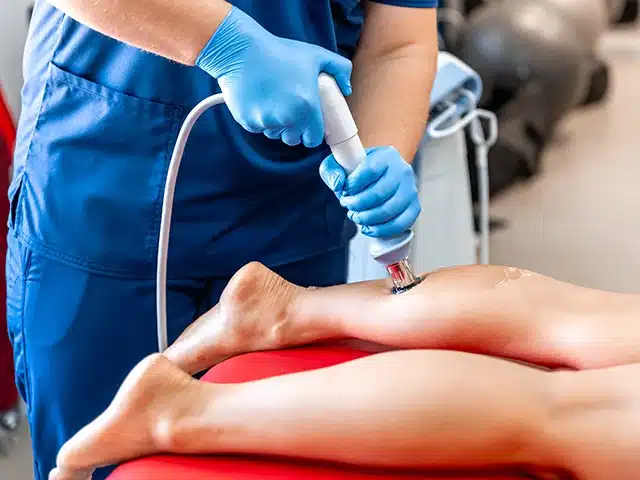
A shock wave session is simple, quick and well tolerated by most patients. No special preparation is needed. After applying a conductive gel to the area to be treated, the physical therapist sets up the device and applies the handpiece for a few minutes, depending on the area and the condition. Generally, between 3 and 6 sessions are performed, one per week. Each session lasts about 10-15 minutes. The energy and the number of pulses are adjusted based on the patient’s condition and response to treatment.
It is important to remember that, although it is a very safe method, there are contraindications, such as:
- the presence of a tumor in the area to be treated
- acute infections
- blood clotting disorders or use of anticoagulants
- pregnancy
- presence of a pacemaker or metal implants nearby
The concrete benefits
The benefits of using shock waves in physical therapy are truly numerous and explain their growing use in rehabilitation. First of all, it is a non-invasive therapy, which requires no scalpel, anesthesia or hospital stay. This means less stress for the patient and greater acceptance of the treatment, especially among those who fear more aggressive approaches.
One of the main strengths is the ability to significantly reduce pain after just a few sessions. In many cases, patients with chronic pain who had found no relief with other treatments have seen a clear improvement thanks to shock waves. This pain-relieving effect comes with a deep stimulation of the body’s natural processes of tissue healing, which makes the therapy effective not only in controlling symptoms but also in promoting a lasting recovery.
Another great advantage is the possibility of limiting the use of anti-inflammatory drugs, often taken for long periods with negative consequences for general health. Shock waves offer an effective therapeutic solution with no significant side effects, and are well tolerated by most patients.
Thanks to how quickly improvements are seen and the absence of recovery time, this method also makes it possible to achieve faster functional recovery than with other traditional therapies.
Finally, and no less important, it should be stressed that shock waves do not replace the work of the physical therapist, but fit perfectly into a complete rehabilitation program. They are a valuable ally to include in targeted protocols that combine manual therapy, therapeutic exercise and personalized interventions. In this way, physical therapy gains one more tool to guide the patient toward an effective and lasting recovery.
The key role of the physical therapist
The physical therapist is indispensable in delivering shock wave therapy and in knowing which conditions it is recommended for. The specialized physical therapists of the NefroCenter Group identify the patients who can truly benefit from the treatment. It is the physical therapy specialist’s job to carry out a thorough functional assessment, establish the correct indication and set up a treatment protocol that combines shock waves, therapeutic exercise, manual therapy and postural work. The patient should never be left alone with shock waves. The physical therapist is essential to consolidate the benefits of the therapy and guide the patient toward a complete and lasting recovery.