Hair loss: vitamin tests at Nefrocenter
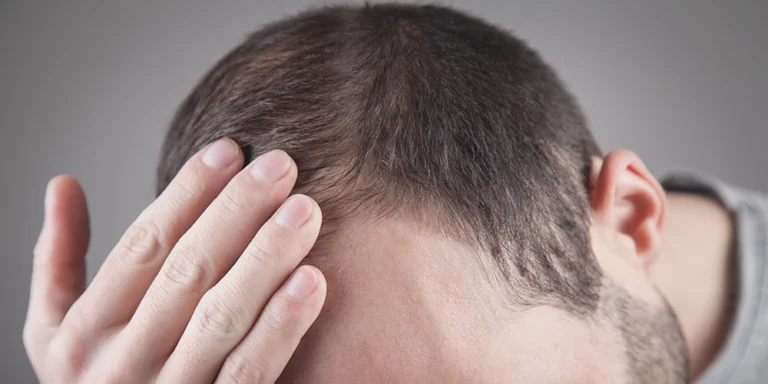
Hair loss is something that can affect anyone. The alarm bell rings when we find hairs on the pillow.

Hair loss is something that can affect anyone. Usually, the alarm bell rings when we wake up in the morning and find hairs on the pillow. Or when we notice hairs left in our hands while we are drying them. In these cases, however, hair loss is not a problem. According to statistics, a person loses 50 to 100 hairs a day under normal conditions. Losing more hairs than that points to some problem that needs to be looked into.
The seasons in which more hair falls out, based on its life cycle, are spring and fall. The phenomenon stands out in these two seasons because of the changes in the weather. Behind it is a hair life cycle that makes shedding between October and December a normal, physiological event. This phenomenon is also made more evident by the hair’s exposure to the sun during the summer months.
Hair loss is normal: the hair life cycle
The hair life cycle has three phases. Hair grows from the hair follicles. The phases are called Anagen, Catagen and Telogen. The hair life cycle lasts about 3 years, with growth of about one centimeter a month. In essence, hairs are replaced, and if this does not happen, androgenetic alopecia may occur.
The Anagen phase
The Anagen phase is the one in which hair forms and grows. The intense mitotic activity of the pilosebaceous follicle reaches its peak of cell reproduction and metabolic activity. It is in this phase that the hair forms and grows.
The Catagen phase
The Catagen phase lasts two to three weeks. It is a time when the hair that has already formed reaches the outer part of the epidermis, moving away from the hair papilla. In this second phase, the Catagen phase, the follicle rests.
The Telogen phase
The Telogen phase is the last in the hair life cycle. It is also the longest. Depending on the person, it lasts 3 to 4 months. This is the phase that also marks the start of a new cycle, but in which hair falls out.
When hair does not grow back
There are several reasons why new hair does not form and grow. Apart from androgenetic alopecia, there may be medical conditions. Some of these may depend on the scalp, such as dermatitis. There are various causes, including psoriasis or seborrheic dermatitis.
Other causes of hair loss
Having tests to check your vitamin levels is essential. At the Nefrocenter Lab laboratories we carry out all the comprehensive tests needed to assess your state of health. Through blood tests, at the Nefrocenter laboratories it is possible to check whether hair loss depends on a deficiency of minerals or trace elements. Hair loss may in fact be caused by strict or unbalanced diets.
Hair loss can also be caused by heavy menstrual periods, celiac disease or poor absorption of food, thyroid disorders, autoimmune diseases or simply stress.
The vitamins hair needs
It is important to maintain the right levels of magnesium, selenium and zinc to avoid hair loss. At the Nefrocenter laboratories it is possible to assess whether the values of these elements are in the normal range and whether any hair loss is due to a deficiency.
Magnesium is essential because it speeds up cell metabolism. Selenium gives elasticity to the hair and also to the scalp. Zinc not only protects the hair but also helps cells repair themselves.
Nefrocenter’s useful tips and the false myths
To protect the health of your hair it is important to avoid smoking and alcoholic drinks and to use the hair dryer properly. The hair dryer should not be used often and, above all, should not be held close to the scalp. Using a suitable shampoo is also essential for healthy hair. It is therefore advisable to choose one suited to the characteristics of your own hair.
Among the false myths about hair loss, some are part of popular belief. It is not true, in fact, that cutting your hair often makes it stronger. Just as it is absolutely false that eggs are bad for it and that olive oil hair packs strengthen it.