PRP in trichology for hair loss
PRP in trichology. A new regenerative frontier against hair loss. It is not just a cosmetic issue.
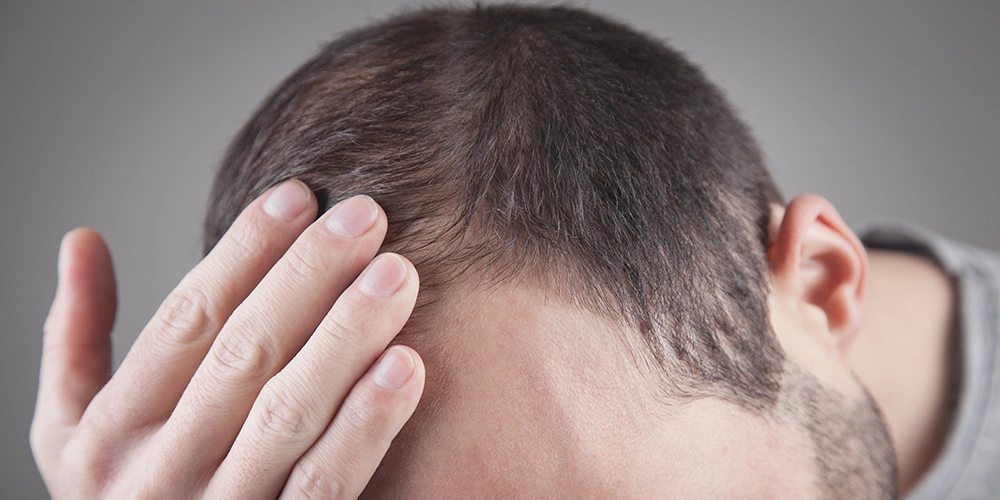
PRP in trichology. A new regenerative frontier against hair loss. Hair loss is not just a cosmetic issue. For many people it is a silent fracture in how they see themselves, a change that affects self-esteem, relationships and the way they move through the world. In recent years trichology has undergone a profound evolution, shifting its focus from purely cosmetic solutions to biological treatments that can act on the causes of hair thinning. PRP fits into this picture: a regenerative therapy that uses the body’s own natural resources to stimulate regrowth and improve the health of the scalp.
PRP in trichology does not promise miracles, but offers a scientific and physiological approach to hair loss, acting on the cellular mechanisms that regulate the life cycle of the hair follicle.
What PRP is and why it matters for hair health
PRP, or Platelet-Rich Plasma, is an autologous concentrate obtained from the patient’s own blood. Through a centrifugation process, a plasma component with a high concentration of platelets is separated out. Platelets are cells that are essential not only for blood clotting but above all for releasing growth factors.
These growth factors are biologically active molecules that stimulate cell regeneration, the formation of new blood vessels and tissue repair. In trichology their role is crucial, because the hair follicle is a dynamic structure that depends heavily on blood supply and on the biological balance of the scalp.
When PRP is injected into the scalp, it creates a microenvironment that favors the reactivation of weakened follicles, counteracting the miniaturization processes that lead to progressive hair loss.
The link between PRP and the hair life cycle
To understand how effective PRP is in trichology, we need to consider the life cycle of the hair. Each follicle goes through three main phases: anagen, the growth phase; catagen, the transition phase; and telogen, the resting and shedding phase. In alopecia, especially androgenetic alopecia, this cycle is altered: the growth phase gets shorter, while the shedding phase becomes more frequent.
PRP works by modulating this balance. Platelet growth factors stimulate follicles to move from the telogen phase to the anagen phase, prolonging the growth phase and improving the quality of the hair produced. The aim is not to create new follicles but to support those that are still viable, slowing down or stopping the thinning process.
Main indications for PRP in trichology
PRP is mainly indicated in forms of hair loss in which the follicle is still present but weakened. The most common condition is androgenetic alopecia, in both men and women, characterized by progressive thinning linked to genetic and hormonal factors.
Another frequent indication is telogen effluvium, a sudden, diffuse hair loss often linked to stress, traumatic events, hormonal imbalances or the postpartum period. In these cases PRP can help the follicular cycle resume more quickly.
The treatment is also used as support after a hair transplant, to improve the take of the grafts and speed up healing of the scalp. From a regenerative standpoint, PRP helps optimize overall results, improving hair density and quality over time.
How PRP treatment is carried out
PRP treatment in trichology is an outpatient procedure that is minimally invasive and well tolerated. After a simple blood draw, the sample is centrifuged to obtain platelet-rich plasma. The concentrate is then injected into the scalp through localized microinjections in the areas affected by thinning.
The session is short and does not require any significant recovery time. Patients can return to their normal daily activities almost immediately. In terms of safety, the use of autologous material greatly reduces the risk of adverse or allergic reactions.
The number of sessions and how often they are held are set according to the clinical condition, age and individual response to treatment. Courses of several sessions are generally planned, followed by periodic booster sessions to maintain the results over time.
Benefits of PRP for the scalp
One of the most interesting effects of PRP concerns not only the hair but the scalp as a whole. A scalp that is inflamed, poorly supplied with blood or altered in its biological balance is an unfavorable ground for hair growth.
PRP improves local microcirculation, promotes tissue oxygenation and helps reduce chronic inflammatory processes. This translates into a healthier environment, able to support follicular function over time. Many patients report not only less hair loss but also an improvement in hair quality, with hair that looks thicker, shinier and more resilient.
Combining PRP in trichology with other therapies
PRP should not be considered an isolated therapy, but part of a broader trichological pathway. Its effectiveness increases when it is combined with other strategies, such as topical treatments, targeted drug therapies or lifestyle interventions.
In this context, PRP plays a role of biological enhancement. While other therapies act on specific mechanisms, such as inhibiting the hormones responsible for follicular miniaturization, PRP works on the biological terrain, improving the follicle’s overall response.
This combination allows a personalized approach, one that takes into account not only the diagnosis but also the patient’s expectations and individual characteristics.
Psychological aspects and quality of life
Hair loss has an impact that goes beyond physical appearance. In many cases it affects self-image, personal confidence and social relationships. Tackling the problem with a treatment that uses the body’s own resources can also carry a symbolic value, reinforcing the perception of a path of care that is natural and respectful of the body.
PRP in trichology therefore fits into a broader vision of medicine, one that sees well-being as a balance between body and mind. For many patients, reducing hair loss and improving the quality of the scalp means regaining confidence and peace of mind.
Limits and realistic expectations for PRP in trichology
It is important to stress that PRP is not a universal solution. Its effectiveness depends on the stage of hair loss and on the residual vitality of the follicles. In cases of advanced alopecia, where the follicle has disappeared, PRP cannot induce new growth.
For this reason, a proper trichological evaluation is essential. Setting realistic indications and achievable goals helps avoid false expectations and places PRP in the most appropriate therapeutic context.
A modern vision of regenerative trichology
PRP is one of the most concrete expressions of regenerative medicine applied to trichology. It does not merely counter a symptom, but aims to restore biological conditions that favor hair growth. It is a treatment that works in dialogue with the body’s natural processes, accompanying and supporting them.
Within the activities of the NefroCenter Group, PRP in trichology, which is also used at the Villa Arbe clinic in Milano, is part of an integrated approach to patient care that values prevention, personalized treatment and the use of advanced biological technologies. It is a choice that looks to the future of hair health not as a simple cosmetic matter, but as an integral part of a person’s overall well-being.