Stroke: symptoms, the FAST method, causes and how to prevent it
Stroke: symptoms to recognize right away, causes, risk factors and how to prevent it. Learning to recognize the symptoms of stroke
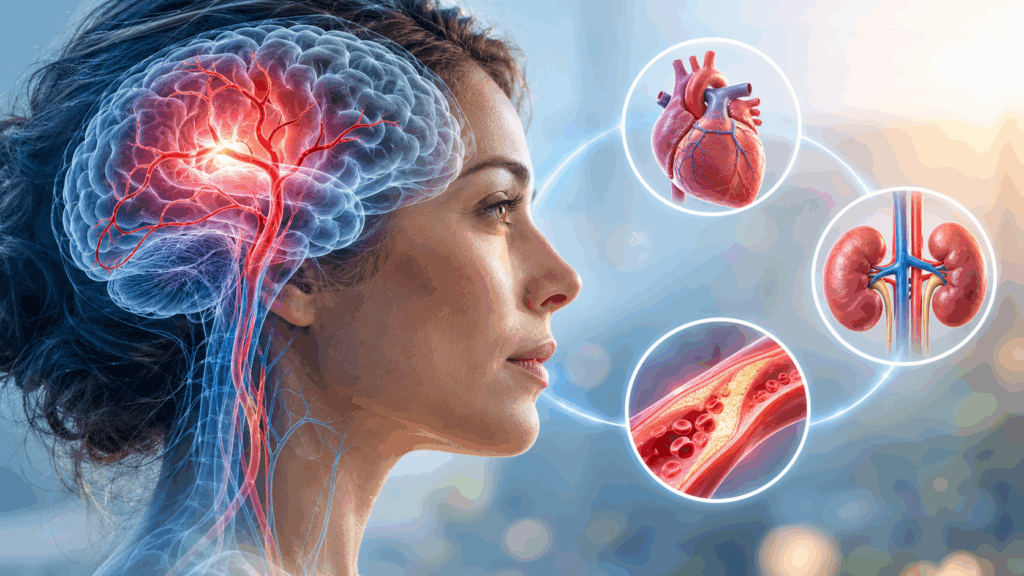
Stroke: symptoms to recognize right away, causes, risk factors and how to prevent it. Learning to recognize the symptoms of stroke with the FAST method can make a difference. But it is just as important to act before the event happens, by keeping high blood pressure, diabetes, atrial fibrillation, cholesterol and kidney health under control. The link between brain, heart and kidneys makes prevention a path that involves the whole body.
A stroke often strikes suddenly. A person may seem perfectly fine and, within moments, notice that one side of the face is not responding as it should, that an arm has become weak, or that words are no longer coming out correctly. This sudden onset is one of the most important characteristics of stroke.
The word itself comes from the Latin ictus, meaning “blow.” From a medical point of view, the event occurs when part of the brain no longer receives enough blood and oxygen, or when a blood vessel in the brain ruptures and causes bleeding. In both cases, nerve cells can quickly be damaged.
That is why stroke is one of the emergencies in which time is of the essence. Recognizing the symptoms immediately and calling emergency services increases the chance of getting the right treatment quickly.
What is a stroke
To understand what happens during a stroke, we need to start from a simple principle: the brain constantly needs oxygen and nutrients carried by the blood.
When blood circulation in the brain is suddenly compromised, the cells in the affected area begin to suffer. The consequences depend on which part of the brain is involved and how extensive the damage is: movement, speech, sensation, vision, balance and many other functions may be affected.
However, not all strokes are the same.
Ischemic stroke: when an artery becomes blocked
Ischemic stroke is the most common form and accounts for about 80% of strokes. It occurs when an artery that carries blood to the brain is blocked.
The blockage can be caused by a clot (thrombus) that forms in the vessel, often in connection with atherosclerosis, or by an embolus coming from another part of the body. One important example is clots that can form in the heart in the presence of certain arrhythmias, in particular atrial fibrillation, and then travel to the blood supply of the brain.
The result is the same either way: downstream from the blockage, part of the brain no longer receives an adequate blood supply.
Hemorrhagic stroke: when a vessel ruptures
Hemorrhagic stroke is different. In this case, a blood vessel in the brain ruptures and blood leaks into the brain or into the spaces surrounding it.
The bleeding can directly damage brain tissue and increase the pressure inside the skull. According to the Italian Ministry of Health, intracerebral hemorrhages account for about 15-20% of strokes, while subarachnoid hemorrhages make up a smaller share.
Here too, high blood pressure is especially important: over time, elevated pressure can contribute to damage to the walls of the small blood vessels in the brain.
Stroke symptoms: the most important word is “sudden”
One characteristic is common to many stroke warning signs: they appear suddenly.
A person may notice that they can no longer move an arm well, have a drooping mouth, be unable to say a sentence correctly, or have difficulty understanding what is being said to them.
Possible symptoms also include a sudden loss of sensation or strength on one side of the body, vision problems in one or both eyes, dizziness with loss of balance or coordination and, in some cases, a very intense headache unlike any usual one. In the most serious cases, there may also be an altered state of consciousness. Italian Ministry of Health
The problem is that these signs are not always immediately recognized as an emergency. Weakness may be put down to tiredness, difficulty speaking to a moment of confusion, a loss of balance to a simple dizzy spell.
With a stroke, however, waiting to see if it passes is a mistake.
The FAST method: four letters to quickly recognize a stroke
One of the simplest ways to remember some of the main symptoms of stroke is the international acronym FAST.
F stands for Face. Ask the person to smile. If one corner of the mouth stays down and the face looks asymmetrical, there may be a neurological deficit.
A stands for Arms. Ask the person to raise both arms at the same time. If one arm tends to drop, or the person cannot raise it, that is another possible sign.
S stands for Speech. You can ask the person to repeat a simple sentence. Speech that is suddenly confused, unintelligible or “slurred,” or an inability to find or understand words, should raise an alarm.
T stands for Time. If even just one of these signs appears, you need to call emergency services immediately.
FAST does not cover all possible stroke symptoms. Sudden vision problems, loss of balance, difficulty walking or an unusually severe headache can also call for urgent attention.
The fundamental rule therefore remains the same: when a sudden neurological deficit appears, do not wait.
Why every minute counts in a stroke
The expression “time is brain” is often used. It is not just a slogan.
When a brain artery is blocked, part of the brain tissue is left without an adequate blood supply. The longer this condition lasts, the greater the damage can become.
In some patients with ischemic stroke, it is possible to intervene with reperfusion treatments designed to restore blood flow, such as intravenous thrombolysis or, in selected cases, endovascular procedures. Whether a treatment is indicated and the treatment window depend on the patient’s characteristics, the time symptoms began and the results of diagnostic tests.
The Ministry of Health stresses that when symptoms consistent with a stroke or TIA appear, you should call for help immediately, rather than waiting for spontaneous improvement or getting to the emergency room on your own. The goal is to enable rapid transport to a facility able to handle a cerebrovascular emergency.
One piece of information can be especially useful to rescuers: the time the symptoms began, or the last time the person was seen without those symptoms.
TIA: when symptoms disappear, it does not mean the danger has passed
A person may have difficulty speaking, weakness in an arm or another neurological problem and then, afterward, everything seems to return to normal.
This should not be taken as reassuring.
A TIA, or transient ischemic attack, causes stroke-like symptoms that go away. However, it is an important warning sign and requires urgent evaluation.
When symptoms disappear, therefore, that does not mean you can wait until the next day to talk to your doctor. Even a deficit that lasted only a few minutes can be a sign of a cerebrovascular problem that needs to be evaluated promptly.
What causes a stroke?
To speak of a single cause would be an oversimplification.
A stroke is often the end point of processes that develop over years. Atherosclerosis, for example, leads to the formation of plaques in the arteries and can promote clotting. In other patients the origin is in the heart: atrial fibrillation can make it easier for clots to form that are able to reach the brain.
There are also diseases of the small blood vessels of the brain, disorders of the carotid arteries and many other conditions that can increase the risk.
For this reason as well, after a stroke or TIA, finding out why the event occurred is essential: knowing the mechanism makes it possible to put in place more targeted prevention of recurrence.
High blood pressure and stroke: why it is so dangerous for the brain
Among all modifiable factors, high blood pressure (hypertension) plays a central role.
High blood pressure can remain silent for years. You do not need to have headaches, dizziness or other symptoms to have hypertension. In the meantime, however, the excess pressure on the artery walls can gradually contribute to vascular damage.
The brain has a very dense network of arteries and small vessels. Prolonged exposure to high blood pressure promotes changes in the vessel wall, atherosclerosis and small vessel disease, increasing the risk of cerebrovascular events.
The most recent U.S. hypertension guidelines in fact reaffirm that high blood pressure is one of the main modifiable factors associated not only with stroke, but also with coronary artery disease, heart failure, atrial fibrillation, dementia and chronic kidney disease.
And this is where a particularly important connection for prevention emerges: the one between the brain and the kidneys.
Stroke, high blood pressure and the kidneys: a closer link than we imagine
Thinking of high blood pressure only as a heart problem means looking at just one part of the picture.
Among the organs most exposed to the effects of high blood pressure are also the kidneys.
The kidney is crossed by an extremely complex network of small blood vessels that allows it to filter the blood. When high blood pressure persists over time, it can damage this microcirculation, contributing to the progressive loss of kidney function.
The relationship, moreover, can work in both directions: high blood pressure can damage the kidney, and kidney disease can make it harder to control blood pressure.
This creates a relationship that involves the cardiovascular system, the kidneys and the brain at the same time.
Chronic kidney disease does not mean that a person will necessarily have a stroke. However, it is a condition associated with a higher cardiovascular and cerebrovascular risk and it frequently coexists with other important risk factors, such as high blood pressure, diabetes and metabolic changes.
For this reason, checking kidney function does not mean taking care of the kidneys alone: it can be part of a broader strategy of cardiovascular and cerebrovascular protection.
Blood pressure and kidneys: why creatinine and a urine test can say something about cardiovascular risk
Chronic kidney disease can progress for a long time without obvious symptoms. By the time significant clinical signs appear, the damage may already be advanced.
To assess kidney health, the doctor can use relatively simple tests, interpreting them in the patient’s clinical context.
Serum creatinine (creatinine in the blood) makes it possible to estimate the glomerular filtration rate, generally referred to as eGFR. A urine test and the search for albuminuria (albumin in the urine) can instead reveal an abnormal loss of albumin, which is an important indicator of kidney damage and also of cardiovascular risk.
These values should not be read in isolation or interpreted by patients on their own. Age, clinical conditions, medications and trends over time are essential to give them the right meaning.
In people with high blood pressure, diabetes or other risk factors, regularly checking kidney health therefore provides a more complete picture of the cardiovascular profile.
Stroke risk factors: some we cannot change, but many we can
The risk of stroke increases with age and is also influenced by family history and individual conditions that we cannot change.
But a significant part of the risk depends on modifiable factors.
Besides high blood pressure, particular attention should be paid to cigarette smoking, diabetes, dyslipidemia (abnormal blood lipids), atrial fibrillation, other heart and vascular diseases, along with overweight, obesity, a sedentary lifestyle and unhealthy eating habits.
The Ministry of Health stresses that primary prevention means precisely identifying these factors early and managing them properly, by acting on lifestyle and, when necessary, through the treatments prescribed by the doctor. According to the ministry’s document on cerebrovascular prevention, a healthier lifestyle combined with adequate medical control in people at high risk could prevent a significant share of cerebrovascular events.
Stroke prevention, therefore, does not begin when the first symptom appears. It begins many years earlier.
How to prevent stroke in everyday life
Prevention does not mean undergoing dozens of tests indiscriminately. It means above all knowing your own risk profile and correcting what can be changed.
Measuring blood pressure regularly is one of the simplest and most important actions, especially because high blood pressure can be completely without symptoms.
Likewise, it is useful to check blood glucose and the lipid profile, as often as your doctor recommends. People with diabetes, high blood pressure or kidney disease need a personalized evaluation and particular attention to taking their treatment as prescribed.
Regular physical activity helps control blood pressure, weight, blood glucose and metabolism. The diet should favor vegetables, fruit in appropriate amounts, whole grains, legumes, fish and sources of unsaturated fats, while limiting excess salt, highly processed foods and saturated fats.
Quitting smoking is another of the most important decisions for vascular health.
There is also a factor that deserves particular attention as we get older: atrial fibrillation. It can cause symptoms, with palpitations or a feeling of irregular heartbeat, but sometimes it is discovered by chance. When present, it must be evaluated by a doctor because under certain conditions it can significantly increase the risk of cardioembolic stroke.
Treatment, of course, must never be changed on your own. This applies to blood pressure medications, anticoagulants, diabetes drugs and any other treatment prescribed to reduce cardiovascular risk.
Blood pressure control protects the brain, heart and kidneys at the same time
There is, then, a thread that ties together many of the aspects covered so far.
Blood pressure that is not adequately controlled can contribute to damage to the blood vessels of the brain, increase cardiovascular risk and progressively impair kidney function. In turn, reduced kidney function can be part of a picture marked by higher cardiovascular risk.
That is why modern prevention increasingly tends not to treat organs as separate compartments.
The brain, heart, arteries and kidneys belong to the same vascular system.
Protecting the kidneys of a person with high blood pressure therefore means being part of a broader strategy. Likewise, addressing the risk of stroke means not limiting yourself to neurology, but looking at blood pressure, metabolism, the heart and kidney function.
After a stroke, prevention becomes even more important
People who have already had a stroke or TIA have a risk of recurrence that makes it essential to identify and control the responsible factors.
Secondary prevention may include, depending on the cause of the event, antiplatelet or anticoagulant drugs, treatments to control blood pressure and cholesterol, and action on other risk factors.
However, there is no single treatment that is the same for everyone.
A stroke caused by atrial fibrillation requires different considerations from an event related to atherosclerosis of the large arteries or to small vessel disease.
For this reason it is essential to follow the prescribed treatments and to have regular check-ups. The Ministry of Health expressly stresses the importance of adherence to treatment in controlling high blood pressure, diabetes, dyslipidemia and atrial fibrillation after a cerebrovascular event.
Stroke and prevention: the role of the NefroCenter Group
The natural history of stroke shows how much prevention should be considered from a multidisciplinary perspective.
Within the facilities of the NefroCenter Group, the experience gained in nephrology and in the care of patients with kidney disease allows particular attention to be paid to one of the most important and sometimes underestimated links: the one between the kidney, high blood pressure and cardiovascular risk.
Assessing blood pressure, kidney function and other metabolic and cardiovascular risk factors can help identify conditions that deserve further investigation and build, together with the specialists involved, a personalized prevention plan.
The goal is not to predict with certainty who will have a stroke – something no check-up can guarantee – but to reduce modifiable risk factors before they can contribute to the development of a cardiovascular or cerebrovascular event.
FAQ – Frequently asked questions about stroke
What are the first symptoms of a stroke?
Stroke symptoms generally appear suddenly. Among the most characteristic are an asymmetrical face or drooping mouth, loss of strength or sensation in an arm or leg, especially on one side only, and difficulty speaking or understanding words. Sudden vision problems, loss of balance and coordination, or a very intense and unusual headache may also appear.
How can you tell if someone is having a stroke?
A simple method is FAST: Face, Arms, Speech, Time. Asking the person to smile, raise both arms and repeat a sentence helps identify some of the main signs. If the face is asymmetrical, an arm drops or speech is suddenly altered, you need to call 112 or 118 (the emergency numbers in Italy) right away.
How long before a stroke does it give warning signs?
A stroke can occur with no warning at all, with neurological symptoms that appear suddenly. In some cases, transient episodes consistent with a TIA may occur beforehand, but they should not be considered a normal “warning”: they require urgent evaluation because they can indicate an increased risk of stroke.
What should you do right away if you suspect a stroke?
You need to call 112 or 118 immediately, without waiting for the symptoms to improve and without getting to the hospital on your own. It is important to remember, when possible, the exact time the symptoms began or the last time the person was seen without symptoms: this information can be crucial for treatment decisions.
If stroke symptoms go away on their own, do you need to go to the hospital?
Yes. Neurological symptoms that disappear spontaneously may be consistent with a transient ischemic attack (TIA). Even if the person seems to return to normal, urgent evaluation is necessary.
What is the difference between ischemic and hemorrhagic stroke?
In ischemic stroke, a brain artery is blocked and part of the brain does not receive an adequate blood supply. In hemorrhagic stroke, on the other hand, a blood vessel ruptures and causes bleeding. The distinction requires diagnostic tests in the hospital and is essential for deciding on treatment.
Can high blood pressure cause a stroke?
High blood pressure (hypertension) is one of the most important modifiable risk factors for stroke. Over time it can damage the arteries and small vessels, increasing the risk of cerebrovascular events. For this reason, measuring blood pressure regularly and treating hypertension properly are fundamental elements of prevention.
Is there a link between kidney disease and stroke?
Yes. Chronic kidney disease is associated with a higher cardiovascular and cerebrovascular risk and often coexists with conditions such as high blood pressure and diabetes. The relationship is complex: high blood pressure can damage the kidneys, and impaired kidney function can make blood pressure harder to control. Having kidney disease does not mean, however, that you will necessarily have a stroke.
What are the main risk factors for stroke?
Among the main modifiable factors are high blood pressure, smoking, diabetes, high cholesterol, atrial fibrillation, a sedentary lifestyle, overweight and obesity. Age and family history, on the other hand, are factors we cannot change. Knowing your risk profile makes it possible to put in place personalized prevention.
How can a stroke be prevented?
Prevention comes mainly from controlling blood pressure, not smoking, a balanced diet, regular physical activity, and controlling diabetes, cholesterol and body weight. It is also important to diagnose and treat conditions such as atrial fibrillation and, in people at risk, to monitor kidney function as well.
Can a stroke affect young people too?
Yes. The risk increases with age, but a stroke can also occur in young adults. In these age groups, different factors and causes may come into play, which require a specific medical work-up.
Is it possible to have a stroke without noticing it?
There are ischemic lesions in the brain that can be found incidentally through imaging tests, without the person remembering any obvious neurological episode. This should not, however, lead to underestimating symptoms: any sudden neurological deficit should be considered an emergency and evaluated promptly.