
Hip replacement with the Bikini technique
Hip replacement with the Bikini technique: minimally invasive surgery, preserved muscles and faster recovery. An incision of about 7-8 centimeters
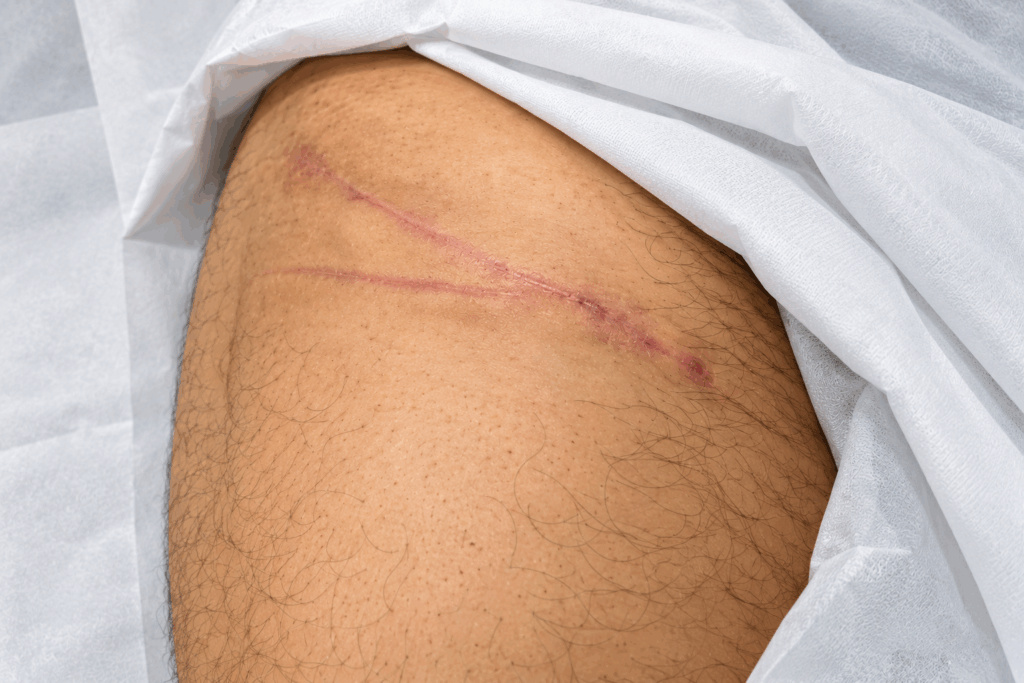
Hip replacement with the Bikini technique: minimally invasive surgery, preserved muscles and faster recovery
Hip replacement with the Bikini technique: minimally invasive surgery, preserved muscles and faster recovery. An incision of about 7-8 centimeters, hidden in the groin crease, and an anterior approach that reaches the joint without cutting the muscles. The Bikini technique is one of the developments in minimally invasive hip replacement surgery. It is used in procedures performed at the Casa di Salute Santa Lucia and the Casa di Cura Santa Rita of the NefroCenter Group.
When hip pain starts to interfere with simple actions such as walking, climbing stairs, putting on shoes or getting up from a chair, quality of life can change profoundly. Hip osteoarthritis does not simply mean living with pain of varying intensity: over time it can gradually reduce independence, change the way you walk and lead you to give up activities that, until recently, were part of everyday life.
When conservative treatments are no longer enough and the joint damage is advanced, hip replacement can be a solution. But the way the surgery is performed has changed too. Today the goal of orthopedic surgery is not only to replace the damaged joint: increasing attention is paid to preserving tissue, controlling pain, early mobilization and functional recovery.
It is within this evolution that hip replacement with the Bikini technique belongs, a variant of the minimally invasive direct anterior approach characterized by an oblique skin incision made along the groin crease. The incision follows the natural lines of the skin and can easily be covered by underwear: hence the name “Bikini”.
At the Casa di Salute Santa Lucia and the Casa di Cura Santa Rita, it is possible to have minimally invasive hip surgery with particular attention to Tissue Sparing Surgery techniques, that is, surgery aimed at preserving tissue. Its professional website expressly lists minimally invasive surgery and the Bikini incision among the techniques used for the hip.
What hip replacement is and when it is needed
The hip is one of the most important joints for our independence. It is made up of the femoral head, roughly spherical in shape, which fits into a socket in the pelvis called the acetabulum. The joint surfaces are covered by cartilage, a tissue that allows the bones to move with very little friction.
When the cartilage deteriorates, as happens above all in hip osteoarthritis or coxarthrosis, movement can become progressively painful and limited. In more advanced stages the pain can also appear at rest or during the night.
Not all patients with osteoarthritis need surgery. In the early and intermediate stages the specialist may consider conservative strategies based on individual characteristics. The decision to opt for a replacement is generally made when the joint damage and symptoms have reached a level that significantly compromises daily life and the other treatment options no longer provide adequate control.
A total hip replacement replaces the damaged joint surfaces with artificial components. The principle of the operation is well established; what has changed profoundly over the years is the materials, the implants, the perioperative protocols and, above all, the surgical approaches used to reach the joint.
Minimally invasive hip surgery: it is not just a smaller cut
One of the most common misconceptions is to associate the term “minimally invasive” only with the length of the incision.
A smaller scar is certainly one of the visible aspects of the surgery, but true minimal invasiveness is mostly about what happens under the skin.
The aim is to reach the joint while respecting the surrounding muscles and tissues as much as possible. In the direct anterior approach, in fact, the surgeon can reach the hip by using anatomical planes between the muscles instead of cutting them to create the surgical route. The reference cited describes the passage between the sartorius and the tensor fasciae latae as the defining element of the approach.
This is an important concept because the muscles around the hip play an essential role in the stability of the joint, in walking and in recovery after surgery.
For this reason it is more accurate to speak of tissue sparing surgery, that is, surgery that respects the tissues, rather than reducing everything to the size of the wound. Minimally invasive surgery of the large joints is, in fact, indicated as one of the main areas of its specialist practice.
Bikini technique for hip replacement: why it is called that
The name is unusual for a surgical procedure, but it immediately describes one of its characteristics.
In the traditional anterior approach the skin incision is generally longitudinal. In the Bikini incision, instead, an oblique incision is made that follows the groin crease and the natural tension lines of the skin.
In the protocol used, the incision is about 7-8 centimeters long and is positioned so that it can generally be hidden by underwear.
The cosmetic aspect, however, should not make you think that the Bikini technique is simply a different way of cutting the skin.
It is more accurate to distinguish two concepts: the minimally invasive direct anterior approach, which concerns the anatomical route the surgeon uses to reach the hip, and the Bikini incision, which describes the orientation of the skin incision.
The scientific literature has specifically analyzed this variant. A systematic review published in 2022, which considered eight comparative studies and more than 2,300 patients overall, found generally similar functional results between the Bikini incision and the longitudinal incision, with several studies indicating better cosmetic satisfaction for the Bikini.
A more recent meta-analysis, published in 2026 and based on eight studies covering 2,017 hips, confirmed a significant advantage in scar appearance compared with the longitudinal incision.
A 7-8 centimeter scar hidden in the groin crease
For many patients the cosmetic aspect is not secondary, especially when the surgery involves people who are still active and have a long life expectancy after the prosthesis is implanted.
The Bikini incision is made along the natural crease of the groin region. This position allows the scar, once the healing process is complete, to be generally less noticeable and easily covered by underwear.
The reference provided describes incisions of about 7-8 centimeters for the minimally invasive anterior approach and emphasizes that an orientation along the skin creases can favor a less noticeable scar from a cosmetic standpoint.
The most recent literature mainly supports this cosmetic advantage: the 2026 meta-analysis found better scar cosmesis with the Bikini incision than with the longitudinal one.
It is nevertheless important to remember that the final quality of a scar depends on many individual factors: skin characteristics, the way the body heals, general condition, body weight, any concomitant diseases and wound management.
Hip replacement with the Bikini technique: the muscles are not cut
The conceptually most important advantage of the minimally invasive anterior approach is therefore not the scar.
It is respect for the muscle structures.
Through the anterior approach the surgeon reaches the joint using an anatomical interval between the muscles. In the technical description given by the reference, the passage runs between the sartorius muscle and the tensor fasciae latae: the muscles are spread apart to allow access to the joint, rather than being cut.
This “muscle sparing” approach is one of the reasons why anterior hip surgery has gradually been integrated into rapid recovery programs.
Preserving tissue does not, however, make the surgery trivial. On the contrary, the anterior approach, and the Bikini variant in particular, requires specific experience and accurate knowledge of anatomy.
Less pain after surgery and faster recovery
One of the aspects of greatest interest for anyone facing a hip replacement inevitably concerns the period after the operation.
“How much pain will I have?” and “when will I walk again?” are probably two of the questions most often asked of the orthopedic surgeon.
Preserving the muscles can fit into a pathway aimed at limiting surgical trauma and encouraging early mobilization. The reference provided by the client associates the minimally invasive approach with less postoperative pain, faster recovery in the first days and earlier discharge.
It is important, however, to avoid assumptions. Recovery after a hip replacement does not depend only on the surgical approach. Age, general condition, muscle strength before the surgery, associated conditions, type of osteoarthritis, bone quality, any previous operations and individual response all influence the timing and manner of recovery.
The surgical technique is therefore one of the elements of a broader pathway that includes preoperative preparation, anesthesia, pain control, physical therapy and mobilization.
Discharge even within 24 hours
One of the goals of the minimally invasive technique is the possibility, in selected patients with a regular course, of reaching discharge within 24 hours of the surgery.
This is a significant change from the traditional view of prosthetic surgery, historically associated with longer hospital stays.
Reducing hospitalization does not mean discharging the patient early regardless of their condition. Safety remains the fundamental criterion.
Before going home, several elements must be assessed: clinical stability, pain control, the ability to get up and move safely according to the team’s instructions, the absence of immediate complications and adequate organization of care after discharge.
For this reason 24 hours is a possible goal in appropriate patients, not a promise that holds for everyone who undergoes the surgery.
Recovering sooner to regain independence
For the patient, the idea of “rapid recovery” has a very concrete meaning.
It means gradually being able to return to the activities of daily life: getting out of bed, walking, moving around the house, tackling stairs when possible, regaining confidence in your movements and, later, resuming your usual habits.
Here too it is essential to tailor expectations. Two people who undergo the same surgery can have different recovery times.
The goal of modern prosthetic surgery is not to set up a race against time, but to create the conditions for the patient to recover safely in the shortest time appropriate to their clinical situation.
The Bikini technique and the risk of dislocation
Among the best-known complications of hip replacement is dislocation, that is, the loss of the normal relationship between the components of the prosthetic joint.
Preserving the muscle and capsular structures is one of the reasons why tissue sparing approaches have attracted great interest also with regard to hip stability.
In the clinical pathway described, a lower risk of dislocation is reported among the observed advantages of the approach used. It is nevertheless correct to distinguish the professional’s clinical experience from the general conclusions of the literature: the reviews specifically devoted to the Bikini incision do not consistently show that the Bikini orientation of the skin incision alone reduces the risk of dislocation compared with all other techniques.
In other words, the potential advantage should be attributed mainly to the characteristics of the anterior approach and tissue sparing, while the individual risk also depends on the correct positioning of the components, the patient’s anatomy, the quality of the tissues and many other factors.
Is hip replacement with the Bikini technique suitable for everyone?
No. And patient selection is precisely one of the fundamental aspects of personalized surgery.
Whether the minimally invasive anterior approach with the Bikini incision can be used must be determined by the orthopedic surgeon after a clinical and radiological evaluation.
The anatomy of the hip, body mass index, distribution of fatty tissue, bone quality, any deformities, previous operations and general condition can influence the choice.
There are some situations in which the technique may not be the ideal solution, and it is stressed that the decision must be made by the surgeon on the basis of the characteristics of the individual case.
Minimal invasiveness, therefore, should not become a goal to be pursued at all costs. The priority remains a correctly positioned prosthesis and a safe clinical result.
Before the surgery: the orthopedic visit remains decisive
The path to a hip replacement does not begin in the operating room.
It begins with a thorough orthopedic visit.
The specialist needs to understand where the pain originates, how much it limits daily life, which treatments have already been tried and what the level of degeneration of the joint is. Imaging tests are then interpreted together with the symptoms and the clinical evaluation.
Only afterward can it be established whether there is really an indication for a replacement and which technique is most appropriate.
This step is especially important when it comes to minimally invasive surgery. It should not be the patient who “chooses a scar” based on what they have seen online: it is the surgeon who must assess whether the anatomy and clinical conditions allow that specific surgical approach to be used safely.
Rehabilitation starts early
Surgery is a fundamental moment, but recovery continues after leaving the operating room.
In modern prosthetic pathways, early mobilization plays a central role. The patient is gradually guided toward regaining the ability to walk and independence, according to the team’s instructions.
The muscle preservation of the anterior approach can make this pathway easier in the early phases, but it does not eliminate the need to respect biological timelines and clinical instructions.
The rehabilitation program is adapted to the condition of the individual patient. The goal is not only to “walk early”, but to recover movement that is effective, safe and progressively more natural.
Minimally invasive hip replacement at Santa Lucia and Santa Rita
The Casa di Salute Santa Lucia and the Casa di Cura Santa Rita, facilities of the NefroCenter Group, offer the opportunity to undergo a hip replacement surgery pathway.
The approach used is part of a modern concept of surgery: operating on the diseased joint while trying, when the patient’s condition allows, to preserve as much healthy tissue as possible and promote early recovery.
The Bikini technique is one of its most interesting expressions: a small incision positioned in the groin crease, an anterior intermuscular approach, attention to tissue preservation and a pathway aimed at reducing hospitalization.
But the most important principle remains another one: there is no single best technique for everyone, there is the most appropriate technique for the individual patient.
This is exactly what the specialist evaluation is for.
FAQ – Frequently asked questions about the Bikini technique
How big is the incision in hip replacement with the Bikini technique?
In the pathway described, the incision is about 7-8 centimeters and is made along the groin crease, in a position normally covered by underwear. The actual size can nevertheless vary depending on the patient’s anatomy and surgical needs.
Are the muscles cut with the Bikini technique?
The direct anterior approach is called muscle sparing because it makes it possible to reach the joint through an intermuscular plane, spreading the muscles apart instead of cutting them to create the access.
Is hip replacement with the Bikini technique only about having a smaller scar?
No. The Bikini incision mainly describes the orientation of the scar in the groin crease. It is associated with a minimally invasive anterior approach that aims to preserve tissue. The strongest comparative evidence on the specific advantage of the Bikini incision mainly concerns the cosmetic appearance of the scar.
Is it possible to go home after 24 hours?
In the surgical pathway, discharge can take place within 24 hours in selected patients and when the clinical course allows it. The timing must always be set by the team on the basis of postoperative conditions.
Is the Bikini technique suitable for everyone?
Not necessarily. Anatomy, body weight, general condition, previous operations and the characteristics of the joint can make another approach more appropriate. The decision is made after the orthopedic evaluation.
Is the Bikini technique safe?
The available studies describe overall favorable results, but this is a technique that requires experience. Among the aspects to consider is possible involvement of the lateral femoral cutaneous nerve. The most recent evidence therefore stresses the importance of correct patient selection and surgical experience.


