Psoriasis: causes and remedies
Psoriasis is a skin disease that affects millions of people worldwide. It is a chronic condition
Psoriasis is a skin disease that affects millions of people worldwide. It is a chronic condition that can alternate between periods of improvement and flare-ups, but that today can be managed effectively thanks to advances in medicine. Those who live with it know how much it can affect not only the body, but also mood and quality of life. Because psoriasis is not just a cosmetic problem: it is a complex inflammatory disease that says something deeper about our internal balance.
What is psoriasis, really?
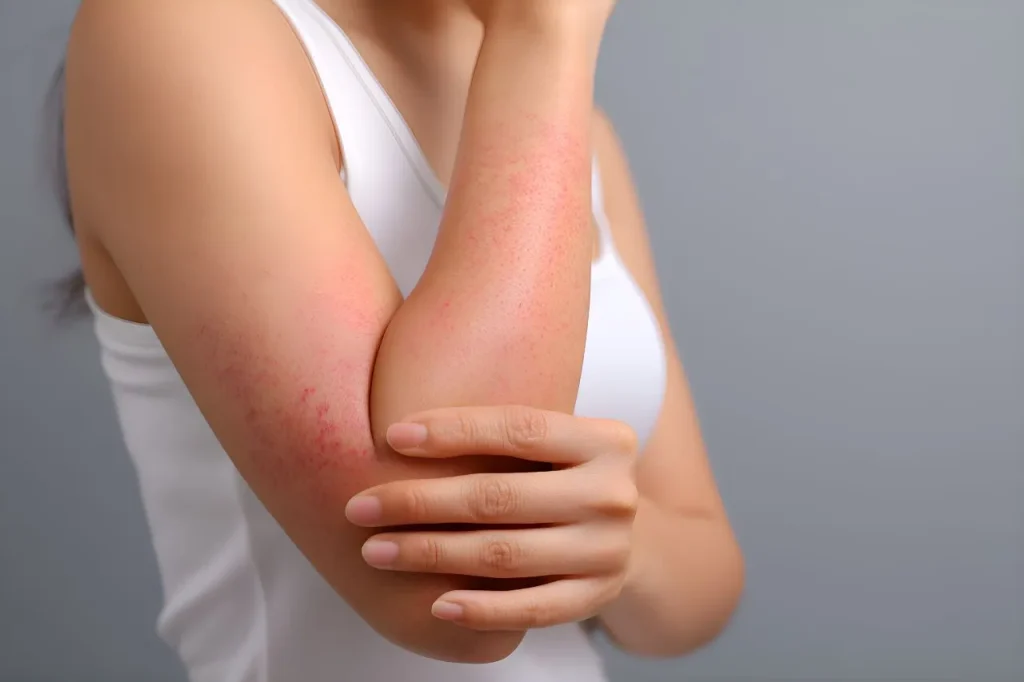
Psoriasis is a chronic inflammatory skin condition that causes red patches covered with white or silvery scales, often located on the elbows, knees, scalp and back. It occurs when skin cells turn over too quickly: instead of renewing themselves in 28 days, as normally happens, the skin regenerates in just 4-5 days, accumulating excess cells on the surface.
This acceleration is caused by a faulty immune mechanism, which leads the immune system to mistakenly attack the skin cells as if they were “enemies”. The result is visible inflammation, often bothersome, but fortunately not contagious.
A multifactorial disease: do you know the causes and triggers?
There is no single cause of psoriasis, but a set of elements that contribute to its onset. Genetic predisposition plays an important role: people with a relative who has psoriasis are more likely to develop it. However, genes alone are not enough: environmental or psychological triggers are also needed.
Among these we find:
- Stress and emotional tension, which can trigger or worsen episodes.
- Infections (such as strep throat, which is common in children).
- Hormonal changes, pregnancy or menopause.
- Cold, dry weather, which tends to dehydrate the skin.
- Medications (such as beta-blockers or antimalarial drugs).
- Unhealthy lifestyles, such as smoking, alcohol and being overweight.
Psoriasis, in fact, is a “systemic” disease: it does not affect only the skin, but can also be linked to other inflammatory or metabolic conditions, such as diabetes, hypertension and psoriatic arthritis.
How to recognize it
Psoriasis shows up with symptoms that vary greatly from person to person.
The typical plaques are red, dry and covered with shiny scales. They can cause itching, burning or pain, and in some cases the lesions spread to cover large areas of the body.
There are several types of psoriasis:
- Plaque: the most common form, with thick, well-defined patches.
- Guttate: characterized by small drop-shaped spots, often after an infection.
- Inverse: affects the skin folds (armpits, groin, under the breasts).
- Pustular: rarer, with the presence of sterile pustules.
- Erythrodermic: the most widespread and severe form, which requires urgent medical care.
Not just the skin: in about one third of cases, psoriasis is also associated with joint problems, with pain and stiffness that point to the presence of psoriatic arthritis.
Diagnosis and the first step toward treatment
Recognizing psoriasis is the job of the dermatologist, who diagnoses it by clinically examining the lesions and, in doubtful cases, through a skin biopsy.
The goal is not only to confirm the diagnosis, but also to assess the severity and type of psoriasis, in order to set up a personalized therapy.
Listening to the patient is also very important: psoriasis has a strong psychological impact, and the conversation with the specialist helps to understand how the disease affects daily life, relationships and self-esteem.
The treatments available today
There is still no definitive cure for psoriasis, but today treatments make it possible to keep the disease under control and, in many cases, to achieve completely clear skin.
The treatment path is personalized according to the extent, the severity and the characteristics of the patient.
Topical therapies
They are recommended for mild or moderate cases. They include creams and ointments based on:
- corticosteroids (to reduce inflammation);
- vitamin D analogues (which slow cell proliferation);
- keratolytics, such as salicylic acid, to remove the scales;
- emollients to keep the skin soft and hydrated.
Consistent application and supervision by the dermatologist are essential for lasting results.
Phototherapy
Controlled exposure to ultraviolet rays (UVB or UVA) is one of the most effective therapies for psoriasis.
The light reduces the inflammatory activity of the skin and slows cell turnover.
It is performed in an outpatient clinic with dedicated equipment or, in some cases, with home lamps prescribed by the doctor.
Systemic treatments
When psoriasis is more widespread or does not respond to local treatments, systemic drugs may be used, such as:
- Methotrexate, cyclosporine or acitretin, which act on the immune system.
-
New-generation biologic drugs, which target specific inflammation molecules (such as TNF-alpha, interleukin 17 or 23).
These therapies, also available as subcutaneous injections, have revolutionized the way psoriasis is treated, allowing stable results and a better quality of life.
An integrated approach
Treating psoriasis also means taking care of yourself as a whole.
A balanced diet, physical activity, stress management and avoiding smoking and alcohol are powerful allies of medical therapy. The specialized centers of the NefroCenter Group offer multidisciplinary pathways involving dermatologists, nutritionists, psychologists and rheumatologists.
Psoriasis and psychological well-being
Living with psoriasis can be difficult. Many people feel discomfort, anxiety or embarrassment, especially if the lesions are visible. This emotional suffering can in turn make the disease worse, creating a vicious circle between mind and skin. Today, medicine recognizes the importance of psychological support in treatment pathways. Talking about the disease, sharing experiences and learning to manage stress helps improve symptoms and quality of life. Practices such as yoga, mindfulness and relaxation techniques can also have a positive effect.
Prevention and daily management
Psoriasis cannot be avoided entirely, but you can learn to control it.
Here are some good habits that help prevent flare-ups:
- Moisturize the skin daily with emollient creams.
- Get sun exposure in moderation and with adequate protection.
- Follow a diet rich in fruit, vegetables and omega-3.
- Avoid smoking, alcohol and prolonged stress.
- Wear comfortable clothing made of natural fibers.
- See the dermatologist regularly for checkups and treatment updates.
The watchword is consistency: with a healthy lifestyle and the right treatment, psoriasis can be kept under control for a long time.
Important results against psoriasis
In recent years, scientific research has made huge strides: new-generation biologic drugs and personalized therapies make it possible to achieve results that were unthinkable until a few years ago. Today many people manage to live without visible skin lesions and with a completely normal quality of life. But the greatest progress is perhaps cultural: psoriasis is no longer seen as a flaw to hide, but as a disease to face with awareness.