Mole mapping
Mole mapping is an essential exam for melanoma prevention. Moles, or melanocytic nevi, are small dark spots on the skin
Mole mapping is an essential exam for the prevention of melanoma. Moles, or melanocytic nevi, are small dark spots on the skin that form because of a buildup of melanocytic cells. These are the cells responsible for producing melanin, the pigment that gives skin its color. Moles can be present from birth (congenital moles) or develop over the course of life (acquired moles).
How moles appear on the skin
The appearance of moles is influenced by a number of factors, including:
- Genetics. Genetic predisposition plays an important role in the development of moles. If parents or other family members have many moles, the person concerned is also more likely to have many.
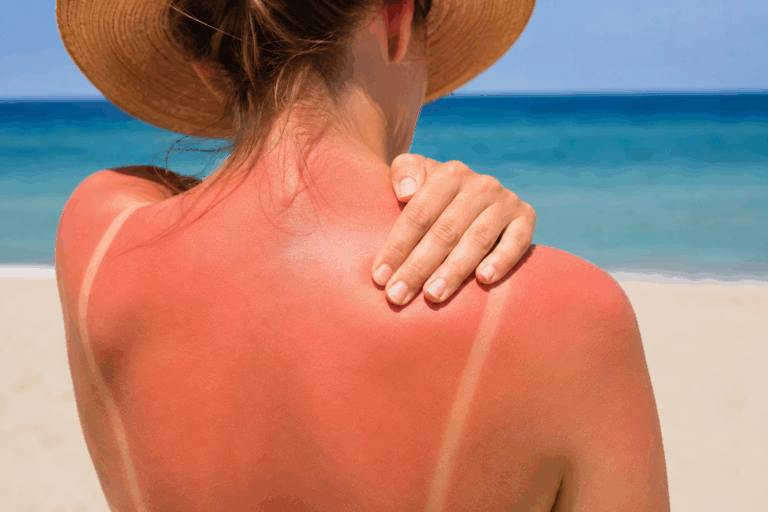
- Sun exposure. Excessive exposure to the sun’s ultraviolet (UV) rays is the main risk factor for the development of moles. UV rays can damage melanocytic cells and trigger their uncontrolled proliferation.
- Hormones. Hormonal fluctuations, such as those that occur during puberty, pregnancy or menopause, can influence the growth and appearance of moles.
How mole mapping is performed
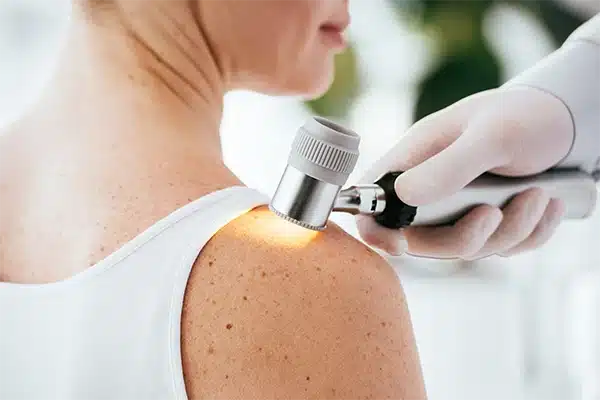
Mole mapping is a dermatological exam that involves carefully checking all the moles on the body to identify any changes in shape, color, size or structure. Mapping is generally performed by a dermatologist using a dermatoscope, an instrument that magnifies the skin and allows the moles to be observed in detail. At the AID Stabia center, a facility of the NefroCenter Group, mole mapping is carried out with the body scan system. The exam can also be done at the AID Oplonti, AID Nocera, AID Nola and Lega Italiana Diabete di Napoli centers.
When to have mole mapping done
Early diagnosis of melanoma is essential to increase the chances of successful treatment. For this reason, it is important to have regular mole mapping and to see a dermatologist immediately if you have any doubts or notice changes in your moles.
Mole mapping is recommended for everyone, but in particular for people who:
- Have many moles (more than 50)
- Have atypical moles (moles with particular characteristics that put them at higher risk of melanoma)
- Have a family history of melanoma
- Are frequently exposed to the sun
- Have had a melanoma in the past
How often to have mole mapping done depends on a number of factors, including age, the number and type of moles and family history. In general, it is recommended to have mole mapping done once a year, but the dermatologist can indicate the most suitable frequency for each individual case.
Which test to have when there is a suspicious mole
If a suspicious mole is found during mole mapping, the dermatologist may request further tests to evaluate its nature. The most common tests include:
- Digital epiluminescence dermoscopy: allows high-resolution images of the mole to be captured for more in-depth analysis.
- Dermoscopy using the ABCD criteria: a method of evaluating a mole based on a series of criteria (asymmetry, irregular borders, uneven color, diameter greater than 5 mm) that makes it possible to identify the moles at higher risk of melanoma.
- Histological examination: if the other tests raise doubts, the dermatologist may take a small sample of the mole to analyze under the microscope. Histological examination makes it possible to identify the nature of the mole with certainty and, in the case of melanoma, to stage its severity.
Book your mole mapping at the center nearest you
AID STABIA – 081 871 13 89 – Castellammare di Stabia
AID OPLONTI – 081 861 43 75 – Torre Annunziata
AID NOLA – 081 512 53 33 – Nola
AID NOCERA – 081 517 84 06 – Nocera Inferiore
LID – 081 560 30 89 – Napoli