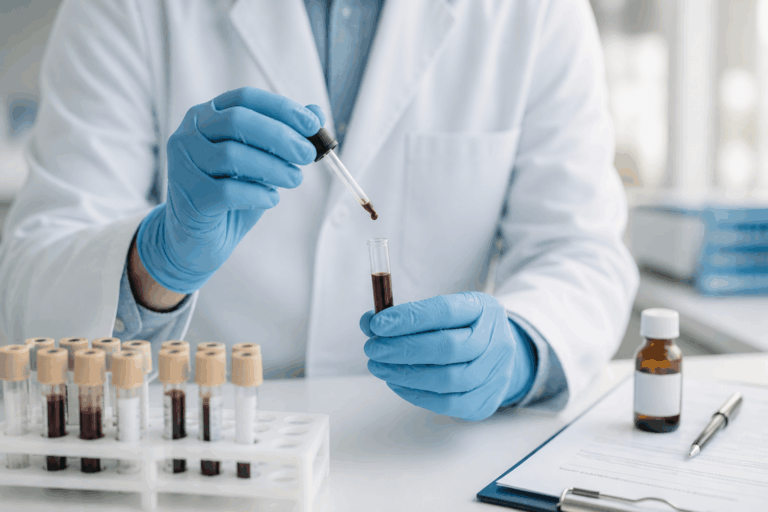
Liver tests: guide to liver function tests, normal values and interpretation
Liver tests are among the most important tests for overall health. The liver performs over 500 vital functions.

Liver tests: why check your liver
Liver tests are among the most important tests for monitoring the body’s overall health. The liver performs over 500 vital functions, including:
-
metabolizing nutrients
-
filtering toxins
-
producing essential proteins
-
regulating blood clotting
Many liver diseases, such as steatosis (fatty liver) or hepatitis, can remain asymptomatic for years. For this reason, blood tests are a fundamental tool for early diagnosis.
If your values are abnormal, it is always advisable to see a specialist. Learn more about fatty liver and its risk factors on Nefrocenter.
When to have liver tests
Routine screening (over 40) with liver tests
After age 40 it is advisable to have a liver panel done periodically, especially if your lifestyle puts you at risk.
Risk factors
It is important to have your liver checked if you have:
-
overweight or obesity
-
diabetes
-
high cholesterol
-
alcohol consumption
-
long-term use of medications
-
viral infections (hepatitis)
Suspicious symptoms
Although often absent, some signs may point to a liver problem:
-
persistent fatigue
-
pain in the right side
-
jaundice (yellow skin)
-
dark urine
-
nausea
Follow-up of existing conditions
People with liver disease must regularly monitor:
-
transaminases
-
bilirubin
-
blood clotting
Liver tests (liver panel)
The so-called liver panel includes several parameters that make it possible to assess how well the liver is working.
Transaminases (AST and ALT)
Transaminases are the best-known indicators of liver health.
-
ALT (alanine aminotransferase) → more specific to the liver
-
AST (aspartate aminotransferase) → also found in muscles
What they measure
They signal damage to liver cells.
Reference values
-
ALT: 7-56 U/L
-
AST: 10-40 U/L
High transaminases: what to do?
High transaminases do not always indicate a serious disease, but they must be evaluated.
Most common causes:
-
fatty liver
-
alcohol
-
medications
-
viral infections
-
intense physical activity
If the values stay elevated for more than 3-6 months, further investigation is needed.
Gamma-GT (GGT)
Gamma GT is a very sensitive enzyme.
Function and meaning
It points to problems in the bile ducts or the liver.
High gamma GT: causes
-
alcohol consumption
-
medications
-
cholestasis
-
hepatitis
It is one of the first values to rise in liver damage.
Alkaline phosphatase (ALP)
Role
Involved in bone metabolism and in the bile ducts.
Elevated values
May indicate:
-
bile duct obstruction
-
liver diseases
-
bone diseases
Bilirubin (total, direct, indirect)
Bilirubin comes from the breakdown of red blood cells.
Metabolism
The liver processes it and eliminates it through bile.
High bilirubin
Can cause:
-
jaundice
-
dark urine
-
pale stools
Albumin
Albumin is a protein produced by the liver.
Meaning
It assesses the liver’s ability to synthesize substances.
Low values
May indicate:
-
liver failure
-
malnutrition
-
chronic diseases
PT/INR (prothrombin time)
PT/INR measures the ability of the blood to clot.
An abnormal value may indicate impaired liver function.
Blood ammonia
Assesses ammonia levels in the blood.
When it is elevated
May indicate:
-
advanced liver failure
-
hepatic encephalopathy
Table of normal values for liver tests (updated 2026)
| Test | Normal values |
|---|---|
| ALT | 7-56 U/L |
| AST | 10-40 U/L |
| Gamma GT | 9-48 U/L |
| ALP | 44-147 U/L |
| Total bilirubin | 0.1-1.2 mg/dL |
| Albumin | 3.5-5.0 g/dL |
| INR | 0.8-1.2 |
Differences between men and women in liver test results
-
Men tend to have slightly higher values
-
Women may have hormonal variations
Important note
Values may vary depending on:
-
age
-
laboratory
-
ethnicity
Imaging liver tests
When blood tests are abnormal, second-level tests are used.
Abdominal ultrasound
First test to assess:
-
fatty liver
-
nodules
-
size
CT scan with contrast
Allows a detailed evaluation of the structures.
Magnetic resonance imaging (MRI)
Indicated for complex liver lesions.
FibroScan (elastography)
Measures liver stiffness and the degree of fibrosis.
Liver biopsy
An invasive test, used in the most complex cases.
To learn more about advanced liver diagnostics you can also consult the hepatology center at Rome American Hospital.
How to prepare for liver tests
Fasting
Fasting for at least 8-12 hours is recommended.
Medications
Some medications can alter the results: consult your doctor.
Physical activity
Avoid intense exertion in the 24 hours beforehand.
Alcohol
Do not drink alcohol for at least 48 hours beforehand.
Interpreting the results: when to worry about your liver test results
One of the most frequent questions is: when should you worry about high transaminases?
It is important to evaluate:
-
how high they are
-
for how long
-
any associated symptoms
Warning signs
-
very high values (more than 3 times the limit)
-
persistence for more than 6 months
-
presence of jaundice
-
abnormal INR or albumin
In these cases it is essential to see a specialist.
Costs and copay exemptions for liver tests
Liver tests are often part of routine tests.
-
National Health Service (SSN): variable copay
-
exemption: for chronic conditions
-
private: €20-100 depending on the panel
Prevention: how to keep your liver healthy
To protect your liver it is essential to:
-
follow a balanced diet
-
limit alcohol
-
maintain a healthy weight
-
get physical activity
-
monitor blood glucose and cholesterol
Prevention remains the most effective strategy.
Liver tests are essential
Having liver tests done is a fundamental tool for monitoring your health and preventing even serious diseases.
Many liver conditions can be reversible if detected early.
Regularly checking your liver values means taking care of your long-term well-being.
⚠️ Important disclaimer
The values given are indicative. Test results must always be interpreted by a specialist doctor who takes into account age, sex, ethnic origin, medical history and other individual factors.