Liver health: symptoms, diseases and tests
A complete picture of liver health requires checkups: blood tests, abdominal ultrasound and FibroScan.

Liver health is essential to your well-being, and lifestyle has a strong effect on it. The liver is a gland made up of four lobes and connected to the digestive system. It is located in the abdomen, in the upper right part. It lies close to the transverse colon and the stomach, and below the diaphragm.
Liver health: how to check it
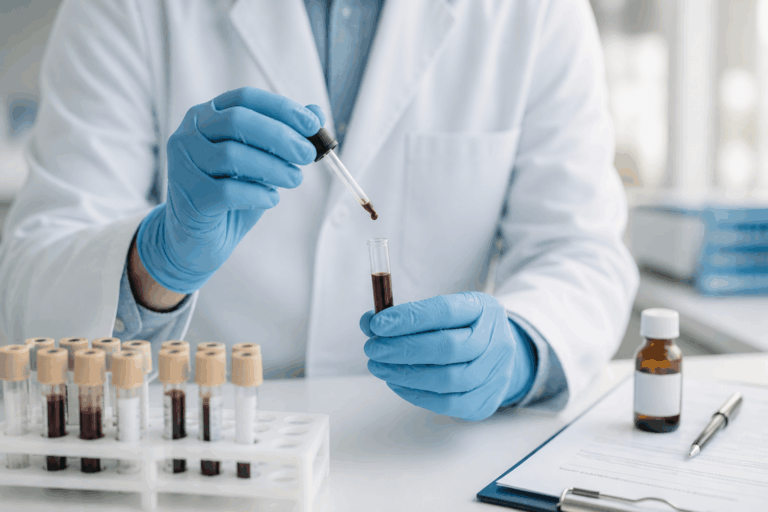
To get a complete clinical picture of liver health, it is important to have regular checkups. They consist of blood tests, an abdominal ultrasound and FibroScan. The Nefrocenter group has state-of-the-art facilities and equipment to carry out a complete diagnosis of the state of your liver health. You can have a test that precisely calculates the percentage of fatty liver using specialized equipment. The hepatologist who reviews the results will thus have a complete picture of liver health and can intervene if needed, once the patient has noticed the symptoms.
Symptoms when the liver is not working at its best
When the liver is not working at its best, we find ourselves in a state of liver failure. In its acute phase, the symptoms can be of many kinds:
- confusion
- difficulty concentrating
- disorientation
- pain on the right side of the abdomen
- yellowing of the skin
- yellowing of the sclera (the white) of the eyes
- general malaise
- nausea
- drowsiness
- vomiting
The symptoms can also occur together. It is important to seek the advice of your doctor, who will recommend tests and a consultation with a hepatologist.
Enlarged liver
When the liver is enlarged, the condition is called hepatomegaly. It means that the gland is larger than the normal expected size. It can also be due to non-pathological causes, so not only in the presence of disease. The causes of hepatomegaly are in fact to be found in lifestyle, particularly in diet. The doctor may also suspect an enlarged liver during palpation. If a suspected hepatomegaly is found, the doctor will order an ultrasound and blood tests to confirm it and find the causes. Hepatomegaly does not cause particular symptoms, but when the volume of the liver grows in a short time, pain may arise on the right side of the abdomen, in the upper part.
Pain on palpation with an enlarged liver
When the doctor performs the maneuver to find out whether the patient has an enlarged liver, the pain may become more pronounced. What is usually a discomfort on the right side of the abdomen, which often does not depend on the liver, turns into pain during and immediately after the medical palpation. In some cases, jaundice, that is, the yellowish coloring of the skin and the whites of the eyes, may also appear at the end of the palpation. Fatty liver (hepatic steatosis), on the other hand, causes no symptoms and involves the accumulation of fat in the liver, which is generally caused by a poor diet or by abuse of alcohol and spirits.
Inflamed liver
The liver can be inflamed as well as enlarged. The symptoms of an inflamed liver are:
- pain in the upper right part of the abdomen
- muscle pain
- yellowing of the whites of the eyes
- yellowing of the skin
- jaundice
- myalgia
- nausea
- loss of appetite
- In more serious cases, the following may also appear:
- weakness
- fever
- pale stools
- pronounced swelling
- digestive difficulties
- rapid weight loss
- dark urine
Liver health: all the rules
There are some essential rules to help the liver. First of all, it is important to drink 2 to 3 liters of water a day. Water helps the kidneys eliminate the waste that the liver produces. Some people use a natural method that consists of drinking a glass of hot water with half a squeezed lemon. It is important for regulating the pH level and preventing acidosis, and it promotes the production of bile. Not leading a sedentary life, by doing physical activity together with a low-calorie diet, brings obvious benefits. Maintaining an ideal body weight and giving up smoking and alcohol also help the liver stay healthy.
Recommended foods for liver health
Several foods are recommended for liver health, and they all have important functions.
- acerola (antioxidant effect)
- watermelon (rich in glutathione)
- oranges (antioxidant effect)
- asparagus (rich in glutathione)
- avocado (rich in glutathione)
- broccoli (rich in glutathione)
- blueberries (antioxidant effect)
- artichoke (detoxifying effect and supports liver function)
- milk thistle (detoxifying effect and supports liver function)
- turmeric (supports liver function and has an antioxidant effect)
- strawberries (antioxidant effect)
- gentian (supports liver function)
- raspberries (antioxidant effect)
- apples (antioxidant effect)
- melon (antioxidant effect)
- peppermint (supports liver function)
- cod (rich in glutathione)
- blueberries (antioxidant effect)
- blackberries (antioxidant effect)
- nettle (detoxifying and draining effect)
- papaya (rich in glutathione)
- pears (antioxidant effect)
- pink grapefruit (antioxidant effect)
- plums (antioxidant effect)
- salmon (rich in glutathione)
- sardines (rich in glutathione)
- mackerel (rich in glutathione)
- dandelion (draining effect)
- green tea (draining and antioxidant effect)
- tuna (rich in glutathione)
There is also misleading information online about the benefits that coffee can bring to the liver. When consumed in moderation, it supports liver function and has protective effects.
Foods that are bad for liver health
If some foods are good for the liver, others can be harmful. Among the foods that are dangerous for the liver are french fries and all foods cooked in a lot of oil, as well as salty foods. Sweets should also be limited, as should sugar (for people who drink a lot of coffee, for example) and candy, because the liver has a hard time metabolizing simple sugars. White rice is also one of the foods the liver does not like.
Liver diseases
Liver diseases can be of different kinds. The best form of prevention is to maintain a healthy lifestyle. In some cases, these diseases cause no symptoms and can also progress seriously, up to cancer of the gland.
Non-alcoholic fatty liver disease
This is the so-called fatty liver. It is the most common disease and is caused by the accumulation of lipids inside the liver cells, that is, the hepatocytes. Diabetes, obesity and, in general, a poor diet promote non-alcoholic fatty liver disease. The disease causes no symptoms, but in the most serious cases its progression can lead to steatohepatitis, which can degenerate into cirrhosis and hepatocellular carcinoma.
Hemochromatosis
Hemochromatosis is also among the liver diseases. It is an accumulation of iron in our body that causes damage particularly to the liver and heart. It can be hereditary and lead to cirrhosis. It is advisable to check the levels of serum iron, transferrin and ferritin with blood chemistry tests, which can be done at Nefrocenter Lab.
Wilson’s disease
At the root of Wilson’s disease is a genetic mutation on chromosome 13. It is a small piece of DNA whose task is to produce ceruloplasmin. This is a substance that carries copper and is essential for the excretion of this mineral. It can cause even serious symptoms after a silent period. Indeed, patients who are affected show movement disorders, depression, loss of control over emotions, hallucinations and delirium. Patients with Wilson’s disease must absolutely not eat beef liver, oysters, nuts, legumes and mushrooms, because they have a high copper content.
Hepatitis A
Hepatitis A is viral in nature and can appear after contact with a virus that can be found in water or contaminated food. The incubation period is one month. The virus is transmitted through the mouth or through direct contact with infected people. Hepatitis A is expected to clear up within two months, but older people need particular attention. Jaundice, fatigue, nausea, vomiting and loss of appetite may occur.
Hepatitis B
Hepatitis B is caused by the HBV virus. It can become chronic, developing first cirrhosis and then hepatocellular carcinoma. Infection occurs through blood, semen or vaginal fluid. It can also be contracted through tattoos, pedicures and piercings performed with infected instruments. The same applies to medical procedures carried out with equipment that has not been sterilized. The symptoms of hepatitis B are similar to those of other forms of hepatitis and appear 90 days after infection. Antiviral drugs are used to keep the development of the disease under control, but in the most serious cases a liver transplant is needed.
Hepatitis C
Hepatitis C is the most serious of the viral forms that affect the liver. Known as HCV, it is spread through the blood. Most of the people affected have no symptoms, which means that the disease is noticed only when a process of cirrhosis is under way. Patients with hepatitis C must be constantly monitored and given antiviral treatment to avoid progressing toward severe liver failure.
Hepatitis E
This is the hepatitis that usually affects travelers, especially those who travel to countries such as China, India, Bangladesh, Pakistan, Peru, Mexico and central and northern Africa. The HEV virus can have fulminant forms with a high mortality rate. The incubation period ranges from 2 weeks to 2 months, and it affects young adults. It is a virus that does not become chronic, but there is no vaccine and the only possible prevention is hygiene.
Treatments, therapies and specialists in Roma at RAH, follow the link:
https://www.rah.it
Read also: Liver symptoms: 15 warning signs not to ignore