Liver cancer: early symptoms, diagnosis and new therapies
Liver cancer is one of the most complex cancers, often because it develops silently
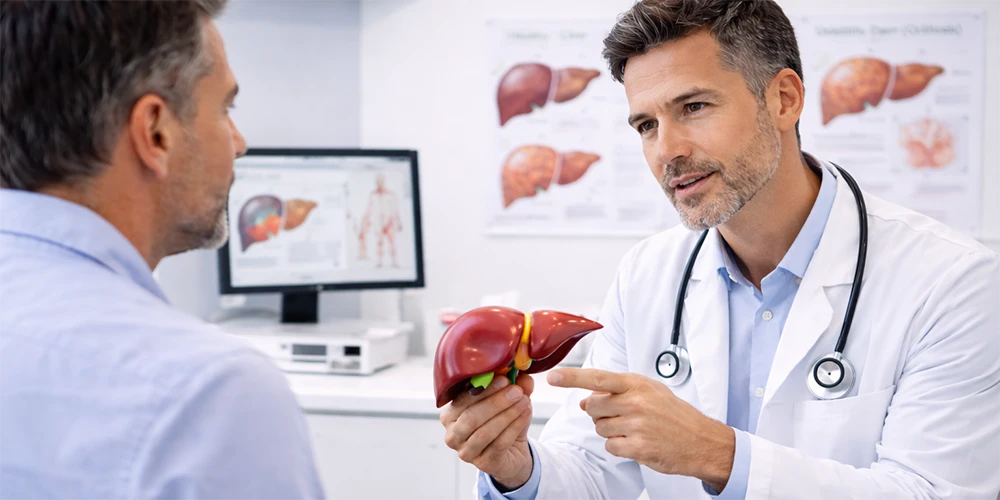
Liver cancer is one of the most complex cancers, often because it develops silently, without obvious symptoms in the early stages.
Many patients discover the disease during routine checkups or when the signs become more evident.
For this reason, early diagnosis is essential.
Today, however, medicine has made great strides: new therapies, immunotherapy and personalized approaches are changing the prognosis.
The most frequent question always remains the same:
can liver cancer be cured?
The answer, today, is increasingly encouraging.
Types of liver tumors
Not all liver tumors are the same. It is important to distinguish between different forms.
Primary liver cancer: hepatocellular carcinoma (HCC)
Hepatocellular carcinoma is the most common malignant tumor of the liver.
It originates directly from liver cells.
In most cases it develops in a liver that is already damaged, often in the presence of cirrhosis.
Cholangiocarcinoma
A tumor that arises from the bile ducts.
It is less common but often more aggressive.
Liver metastases
The liver is one of the organs most often affected by metastases.
The most common cancers that spread to the liver are:
-
colorectal
-
lung
-
breast
Benign liver tumors
Not all nodules are malignant tumors.
Benign forms include:
-
liver hemangioma
-
adenoma
-
focal nodular hyperplasia
They often do not require treatment.
Risk factors for hepatocellular carcinoma
In 80% of cases, liver cancer develops on top of liver cirrhosis.
Main risk factors
-
chronic hepatitis B
-
chronic hepatitis C
-
liver cirrhosis
-
steatohepatitis (NASH)
-
excessive alcohol consumption
-
diabetes
-
obesity
-
hemochromatosis
-
exposure to aflatoxins
Prevention is essential.
Symptoms of liver cancer
Early stage
Often asymptomatic.
This is the main reason why diagnosis comes late.
Advanced stage
As the disease progresses, the following may appear:
-
pain in the right side of the abdomen
-
weight loss
-
persistent fatigue
-
nausea
-
jaundice (yellow skin and eyes)
-
ascites (fluid in the abdomen)
-
fever
These symptoms always require further investigation.
Screening in patients at risk
People with liver disease must have regular checkups.
Recommended screening
-
liver ultrasound every 6 months
-
alpha-fetoprotein (AFP) blood test
Screening makes it possible to detect tumors at an early stage.
Who should be screened
-
patients with cirrhosis
-
chronic hepatitis B or C
-
advanced fatty liver (NASH)
-
family history
In these cases, monitoring is essential.
Diagnosis of liver cancer
Imaging
-
ultrasound
-
contrast-enhanced CT scan
-
magnetic resonance imaging (MRI)
They make it possible to identify and characterize lesions.
LI-RADS criteria
A system used to classify liver lesions in patients at risk.
Liver biopsy
Not always necessary, but useful in doubtful cases.
Staging
Systems used include:
-
TNM
-
BCLC (Barcelona Clinic Liver Cancer)
They serve to define the treatment.
Treatments by stage
Treatment depends on the stage of the disease.
Early stage (BCLC 0-A)
This is the stage in which the chances of cure are highest.
Options
-
surgical resection
-
liver transplant
-
percutaneous ablation (radiofrequency or microwave)
In some cases, one can speak of a cure.
Intermediate stage (BCLC B)
Treatments
-
TACE (chemoembolization)
-
radioembolization (SIRT)
They slow tumor growth.
Advanced stage (BCLC C)
Systemic therapies
-
sorafenib
-
lenvatinib
Immunotherapy
-
atezolizumab + bevacizumab
Today it represents one of the most important advances.
New liver cancer treatments 2026
Research is opening up new scenarios.
Combination immunotherapy
It stimulates the immune system against the tumor.
Targeted therapies
They hit specific tumor cells.
CAR-T cells
An advanced therapy still under study.
Therapeutic vaccines
New strategies to prevent recurrence.
The future is increasingly personalized.
Terminal stage (BCLC D)
When the disease is advanced, the goal is to improve quality of life.
Palliative care
-
pain control
-
nutritional support
-
psychological support
The patient always remains at the center.
Liver cancer: can it be cured?
This is one of the most important questions.
The answer depends on several factors:
-
stage of the disease
-
condition of the liver
-
available treatments
Chances of cure
-
high in the early stages
-
limited in the advanced stages
A liver transplant can offer a definitive cure in selected cases.
Liver cancer survival
Survival by stage
| Stage | Survival |
|---|---|
| Early | over 70% at 5 years |
| Intermediate | 20-40% |
| Advanced | less than 20% |
The data vary depending on the treatment.
Prognostic factors
-
stage of the tumor
-
liver function
-
response to therapies
-
the patient’s general condition
Prevention of liver cancer
Prevention is the most effective weapon.
Strategies
-
hepatitis B vaccination
-
hepatitis C screening
-
management of fatty liver
-
reducing alcohol
-
physical activity
Many liver cancers are preventable.
Quality of life and support
Facing a cancer does not mean only treating the disease, but taking care of the person.
Psychological support is essential.
-
managing anxiety
-
family support
-
dedicated programs
You are not alone.
Between realism and hope
Liver cancer is a complex disease, but today it is no longer a diagnosis without prospects.
Medicine is evolving rapidly.
-
earlier diagnoses
-
more effective therapies
-
personalized approaches
And above all, more and more patients are able to live with the disease or to overcome it.
The key remains just one: do not wait for symptoms and rely on specialists.