Hemodialysis or peritoneal dialysis: the differences
Hemodialysis or peritoneal dialysis: the differences. When kidney function drops significantly
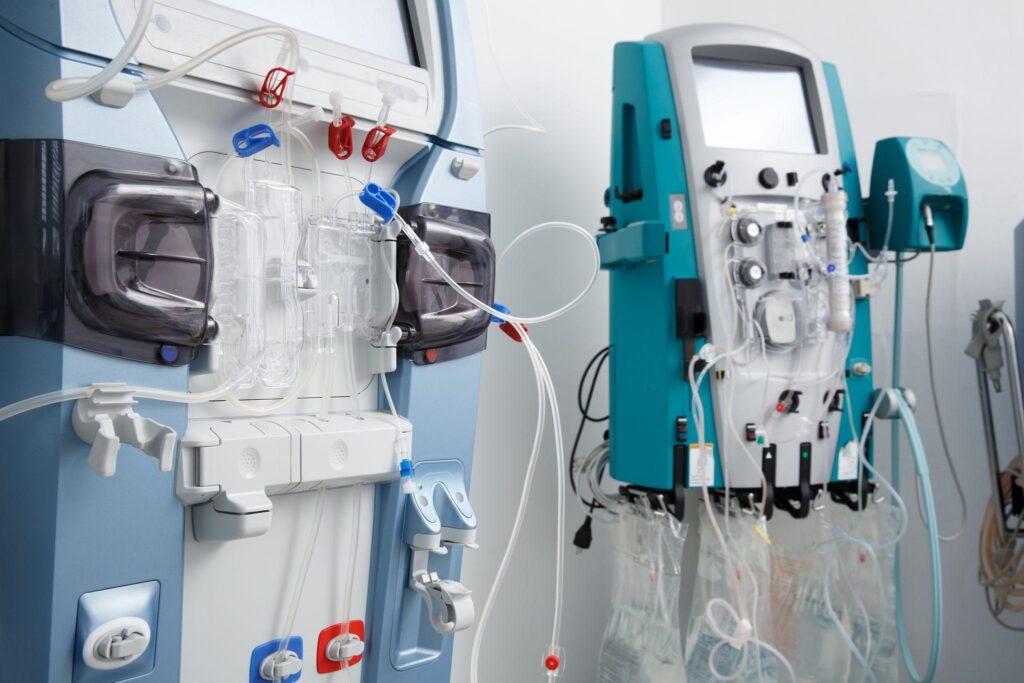
Hemodialysis or peritoneal dialysis: differences, advantages and how to choose with your nephrologist
Hemodialysis or peritoneal dialysis: the differences. When kidney function drops significantly, the body can no longer eliminate waste products and excess fluid. At this stage, known as advanced kidney failure, medicine offers replacement therapies able to maintain the body’s internal balance.
Among these, the two main options are hemodialysis and peritoneal dialysis. They are treatments that differ in method, organization and impact on daily life, but both are effective.
Understanding the differences and advantages of each therapy is essential for making an informed choice together with your nephrologist, within a personalized care pathway.
What dialysis is and when it is needed
Dialysis is a treatment that replaces some of the functions of the kidneys when they can no longer perform them.
The functions that are replaced
Dialysis makes it possible to:
- eliminate metabolic waste products
- remove excess fluid
- maintain the balance of mineral salts
- regulate the pH of the blood
This therapy becomes necessary when the most advanced stage of chronic kidney disease is reached.
Hemodialysis: how it works
Hemodialysis is the best-known form of dialysis.
The operating principle
Blood is drawn from the body and passed through an external filter, called a dialyzer, which removes the waste substances.
Once purified, the blood is returned to the body.
Where it takes place
Generally, hemodialysis is performed in specialized centers, under the supervision of healthcare staff.
Peritoneal dialysis: how it works
Peritoneal dialysis uses a natural membrane of the body, the peritoneum, as a filter.
The mechanism
A special fluid is introduced into the abdominal cavity through a catheter. This fluid absorbs waste products and excess fluid from the blood.
After a few hours, the fluid is replaced with a fresh one.
Where it takes place
Unlike hemodialysis, peritoneal dialysis can be done at home, giving the patient greater independence.
Differences between hemodialysis and peritoneal dialysis
The two therapies differ in method, frequency and impact on daily life.
Treatment method
- Hemodialysis: uses an external filter
- Peritoneal dialysis: uses the peritoneum
Frequency
- Hemodialysis: sessions generally three times a week
- Peritoneal dialysis: daily treatment
Location
- Hemodialysis: specialized center
- Peritoneal dialysis: home
Advantages of hemodialysis
Hemodialysis is a well-established solution in clinical practice.
Constant medical supervision
The treatment takes place in a healthcare setting, with continuous monitoring by specialized staff.
A set schedule
Sessions are organized on specific days and at specific times, which makes the treatment path easier to manage.
Advanced technological support
The dialysis centers have modern equipment that ensures high safety standards.
Advantages of peritoneal dialysis
Peritoneal dialysis offers greater flexibility.
Independence
Patients can manage the treatment on their own, without having to go to the hospital often.
Continuity of treatment
Because it is done daily, peritoneal dialysis is more physiological and less stressful for the body.
Greater freedom
It allows better integration with daily, work and family life.
Disadvantages and limits of the two therapies
Each treatment also has some limits.
Hemodialysis
- need to travel to a center
- possible fatigue after sessions
- restrictions on fluid intake
Peritoneal dialysis
- requires a suitable home environment
- patient training is needed
- risk of infections such as peritonitis
How to choose between hemodialysis and peritoneal dialysis
The choice is never standardized.
The role of the nephrologist
The nephrologist evaluates several factors:
- the patient’s clinical condition
- age and lifestyle
- the presence of other conditions
- family support
Personalizing the pathway
Modern medicine focuses on a personalized approach that takes into account individual needs and quality-of-life goals.
Quality of life and dialysis
The choice of therapy affects everyday life.
The impact of hemodialysis
It requires a set routine and can limit travel, but it offers a high level of clinical control.
The impact of peritoneal dialysis
It allows greater flexibility, but requires independence and responsibility in managing the treatment.
The future of dialysis
In recent years, nephrology has made significant progress.
Technological innovation
Equipment is increasingly advanced, improving the safety and effectiveness of treatments.
A patient-centered approach
The focus is increasingly on quality of life and on fitting the therapy into everyday life.
When to consider a kidney transplant
Dialysis is a replacement therapy, but it does not fully restore kidney function.
In some cases, a kidney transplant can be an alternative.
FAQ
What is the main difference between hemodialysis and peritoneal dialysis?
Hemodialysis uses an external filter, while peritoneal dialysis makes use of the peritoneum.
Which dialysis is better?
There is no single answer: it depends on the patient’s condition and needs.
Can you switch to a different type of dialysis?
In some cases yes, based on the nephrologist’s evaluation.
Is dialysis painful?
Generally no, but it can cause some initial discomfort.
Can you work during dialysis?
Yes, many patients are able to keep an active life with suitable organization.
Hemodialysis or peritoneal dialysis: a choice that is not only clinical
Hemodialysis and peritoneal dialysis are two fundamental tools in the management of advanced kidney failure.
The choice between the two is not only clinical, but also concerns quality of life and personal needs.
Relying on a nephrologist and building a tailored pathway together makes it possible to approach the therapy with greater awareness and peace of mind.
Modern medicine does not offer standard solutions, but accompanies the patient at every stage of their care pathway.