Thrombosis: symptoms, causes, prevention and risks in dialysis
Thrombosis: what it is, deep vein thrombosis symptoms, causes, prevention and pulmonary embolism. Dialysis and arteriovenous fistula risks
Thrombosis: what it is, symptoms, risk factors and prevention. The risks for dialysis patients
Thrombosis: what it is, symptoms, risk factors and prevention. The risks for dialysis patients. A leg that suddenly swells, becomes painful or feels warmer than the other. Chest pain along with difficulty breathing. Or, in a hemodialysis patient, an arteriovenous fistula that looks different than usual and no longer has its characteristic vibration.
These are different situations, but they can have one thing in common: a blood clot forming inside a vessel.
Thrombosis is a condition that should not be underestimated because, depending on the vessel involved and the place where the clot forms, it can have very different consequences. One of the best-known forms is deep vein thrombosis, which mainly affects the deep veins of the legs. The most feared complication is pulmonary embolism, which occurs when part of the clot reaches the circulation of the lungs.
For people with chronic kidney disease, and especially for those on dialysis, the issue becomes even more complex. The tendency toward venous thromboembolism can be compounded by problems related to the vascular access needed for hemodialysis. However, thrombosis of the dialysis fistula should not be confused with deep vein thrombosis: they are different conditions, with their own mechanisms, consequences and treatment approaches.
Understanding what thrombosis is, learning to recognize its symptoms and knowing your own risk factors is therefore especially important, particularly for patients with kidney disease.
What is thrombosis?
Blood has a delicate system of balance. It must stay fluid inside the vessels but, when an injury occurs, it must be able to clot quickly to limit blood loss.
Clotting is therefore an essential physiological mechanism. The problem arises when a clot, called a thrombus, forms inside a blood vessel when it is not needed, or grows until it significantly obstructs the normal flow of blood.
Thrombosis can affect the venous system or the arterial system. This distinction is fundamental because the consequences can be different.
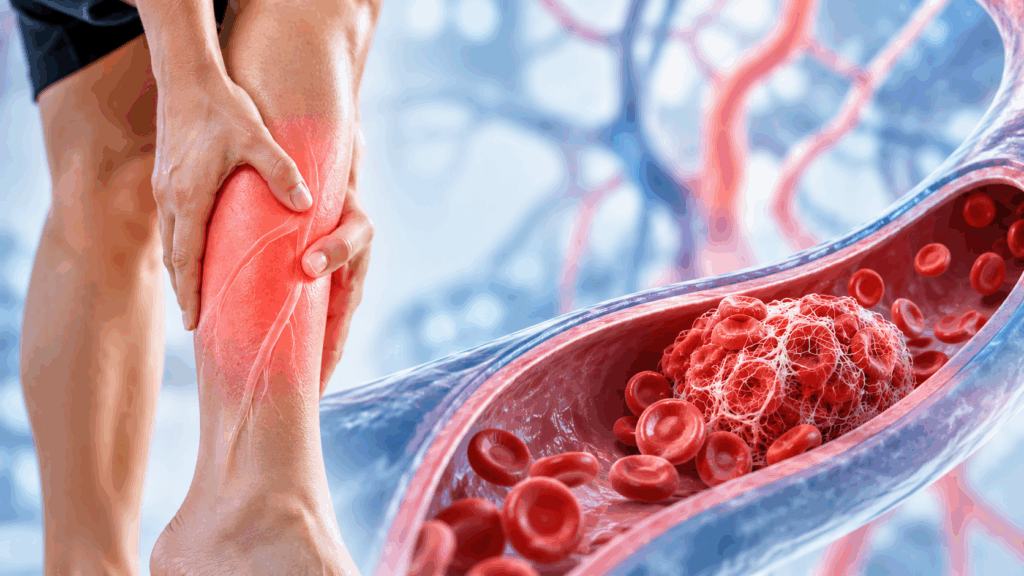
Venous thrombosis affects the veins, that is, the vessels that carry blood back to the heart. When the clot develops in the deep veins, usually of the legs but sometimes of the arms, it is called deep vein thrombosis or DVT.
Arterial thrombosis, on the other hand, affects the arteries and can cut off the supply of blood and oxygen to tissues. It is the mechanism that may be involved, for example, in myocardial infarction (heart attack) and in some types of stroke.
When people speak commonly of thrombosis and the risk of pulmonary embolism, the reference is generally to venous thromboembolism, a term that includes both deep vein thrombosis and pulmonary embolism.
Deep vein thrombosis: what are the symptoms?
One of the aspects that makes deep vein thrombosis insidious is that it does not always cause obvious symptoms.
When they are present, the signs generally affect only one limb. The leg may swell, become painful or more tender, feel warm and look a different color from the other leg.
The pain may be felt mainly in the calf, but its location depends on where the clot is.
However, you should not try to make a diagnosis on your own based on symptoms. Swelling or pain in the leg can have many causes. When they appear suddenly, especially in the presence of risk factors for thrombosis, a prompt medical evaluation is needed.
Likewise, the absence of obvious symptoms does not rule out a DVT.
From thrombosis to pulmonary embolism: why it can become an emergency
The most dangerous complication of deep vein thrombosis is pulmonary embolism.
Part of the clot may break off from its original location, enter the bloodstream and reach the lungs, where it can block one or more branches of the pulmonary artery.
In this case, the following may appear suddenly: difficulty breathing, chest pain or discomfort, a faster heart rate, a feeling of lightheadedness or loss of consciousness. In some cases, coughing up blood may occur.
The severity depends on the extent of the blockage and on the person’s general condition. A major pulmonary embolism can quickly compromise cardiovascular function and become a medical emergency.
For this reason, sudden shortness of breath, chest pain, fainting or other symptoms consistent with a pulmonary embolism require immediate medical attention.
It is also possible to develop a pulmonary embolism without having previously recognized the symptoms of deep vein thrombosis.
Why does a clot form?
The formation of a clot rarely depends on a single cause. More often it results from the interaction of several factors.
As early as the nineteenth century, the physician Rudolf Virchow described three fundamental conditions that favor thrombosis: slowing of blood flow, damage to the vessel wall and an increased tendency of the blood to clot. These principles, known as Virchow’s triad, are still useful for understanding why certain conditions increase the risk of clotting.
Prolonged immobility is an intuitive example. When we stay still for many hours, the muscle pump in the legs works less and the return of blood through the veins slows down. This is one of the reasons why long periods in bed, hospital stays, surgery or very long journeys can increase the risk in predisposed people.
Trauma or surgery can also damage the vessels and temporarily change the balance of clotting.
To these elements can be added age, obesity, a previous thrombosis or pulmonary embolism, some cancers, certain chronic diseases, pregnancy and the period immediately after childbirth, some estrogen-containing therapies, the presence of a central venous catheter and some inherited forms of thrombophilia.
The risk increases especially when several factors are present at the same time.
Thrombosis and chronic kidney disease: what is the connection?
The relationship between chronic kidney disease and thrombosis deserves particular attention.
The kidney is not simply an organ responsible for eliminating waste. The progressive reduction of kidney function causes changes that involve the whole body, including the cardiovascular system, the endothelium and the delicate mechanisms that regulate clotting and bleeding.
Studies show that chronic kidney disease is associated with an increased risk of venous thromboembolism, and that this risk tends to rise as kidney failure progresses.
A systematic review and meta-analysis published in 2024 confirmed the association between the different stages of chronic kidney disease and a higher risk of venous thromboembolism, identifying a particularly significant risk in end-stage kidney disease.
This does not mean that a patient with kidney disease will necessarily develop a thrombosis. It means, rather, that kidney function must be considered as part of the overall assessment of thrombotic risk.
In patients with advanced kidney disease, chronic inflammation, changes in the vascular endothelium and alterations in the clotting systems come into play. Advanced age, diabetes, cardiovascular disease, reduced mobility, hospital stays and the presence of venous access devices may be added to these factors.
There is also an apparent paradox: as kidney function worsens, not only the risk of thrombosis but also that of bleeding can increase.
This is one of the reasons why prevention, and above all anticoagulant therapy, in patients with kidney disease require careful specialist evaluation.
Thrombosis and dialysis: why the risk requires particular attention
In patients on dialysis the picture becomes even more complex.
End-stage kidney disease brings significant changes in the hemostatic balance and often coexists with other conditions that affect cardiovascular and thrombotic risk. Patients on dialysis may also have a history of hospital stays, surgery and use of central venous catheters.
The available evidence indicates that the risk of venous thromboembolism is higher in people with advanced kidney failure than in those with preserved kidney function. A recent meta-analysis also observed, in sensitivity analyses, a higher risk of venous thromboembolism in hemodialysis patients than in those on peritoneal dialysis.
These are epidemiological data that should not be turned into a prediction for the individual patient. They serve instead as a reminder of how important it is to assess risk individually.
But when we talk about thrombosis and dialysis, there is also a second, very specific problem: thrombosis of the vascular access.
Dialysis fistula: what happens?
To perform hemodialysis, it is necessary to have access to the bloodstream that can guarantee an adequate flow during treatment.
One of the types of access used is the arteriovenous fistula, created surgically by connecting an artery to a vein. Over time, the vein exposed to the greater blood flow increases in size and becomes usable for dialysis sessions.
For the hemodialysis patient, the fistula is therefore a true vascular asset to be protected.
One of the most important complications is thrombosis of the dialysis fistula, that is, the formation of a clot that can drastically reduce or stop the flow inside the access.
One point is important to clarify: thrombosis of the arteriovenous fistula is not the same as deep vein thrombosis of the leg and should not automatically be associated with pulmonary embolism. It is a problem of the vascular access, with its own characteristics.
Very often, behind the thrombosis of a fistula or a graft there is a stenosis, that is, a narrowing that obstructs blood flow. As resistance increases and flow decreases, the likelihood that the access will become clotted increases.
Stenosis is in fact one of the main causes of arteriovenous access dysfunction and can come before the loss of its function.
Other factors can also contribute, including episodes of low blood pressure (hypotension) or low blood volume (hypovolemia), changes in arterial inflow and problems related to repeated cannulation. For this reason, monitoring the fistula throughout the course of dialysis is not a technical detail but an essential part of care.
How can you tell if the dialysis fistula is developing a clot?
A working fistula normally produces a characteristic vibration that can be felt by gently resting the fingers on the skin, called a thrill. When listening with a stethoscope, a whooshing sound (bruit) can also be heard.
A significant change in, or the disappearance of, the thrill can be a sign of altered flow.
A clotted fistula may lack the normal vibration; in some cases pain, hardening and tenderness may appear along the course of the vessel. Changes in how the access performs during dialysis can also suggest the presence of a stenosis or of progressive dysfunction.
For the dialysis patient, learning to know their own vascular access is therefore important.
If the thrill you usually feel disappears or changes markedly, you should contact your dialysis center promptly, without waiting for the next session. An early evaluation can be decisive in checking that the access is still open (patency) and in deciding whether an intervention is needed.
Can thrombosis of the fistula be prevented?
Not every episode can be avoided, but the purpose of monitoring the vascular access is precisely to detect any problems before they lead to a complete loss of function.
The dialysis team evaluates over time the characteristics of the fistula, how it is being used and the signs that may suggest a stenosis or a reduction in flow.
The patient also plays an important role. Knowing the usual appearance of your own fistula and the feel of the thrill makes it easier to notice a change.
The fistula must also be protected from trauma and managed according to the instructions received from the dialysis center.
One mistake to avoid is thinking that taking aspirin or an anticoagulant on your own can “protect” the fistula. Drug prevention of vascular access thrombosis cannot be improvised, and the guidelines do not support the indiscriminate use of anticoagulants to keep a fistula open.
In patients with advanced kidney failure, in particular, every decision about antithrombotic therapy must also take bleeding risk into account.
How to prevent thrombosis in the general population
Preventing thrombosis starts first of all with knowing your own risk factors.
Staying physically active, avoiding long periods of immobility when possible, controlling your body weight and following your doctor’s instructions if you have chronic conditions are all useful behaviors.
After surgery or a hospital stay, when clinical conditions allow, early mobilization is one of the strategies used to reduce the risk of venous thromboembolism.
On very long journeys, it can be useful to get up periodically and move your legs. In people at high risk, however, preventive strategies must be set by the doctor: in some cases graduated compression stockings or preventive anticoagulant medication (prophylaxis) may be indicated.
Not everyone needs medication and, above all, anticoagulants should not be taken on your own to prevent a thrombosis.
Prevention in dialysis patients: why “do-it-yourself” is especially risky
For a person on dialysis, some general advice must necessarily be adapted.
One obvious example concerns hydration. In the general population, proper hydration is part of the normal health recommendations, but a patient with advanced kidney failure may have specific restrictions on fluid intake.
It is therefore not correct to suggest generically to someone on dialysis that they “drink more” to prevent thrombosis.
The amount of fluids must follow the plan set by the nephrologist and the dialysis center, based on residual urine output, interdialytic weight gain and the individual’s cardiovascular condition.
The same principle applies to medications.
Kidney function affects the elimination of many anticoagulants, and the patient with kidney disease has a particular combination of thrombotic and bleeding risk. The choice of active ingredient, dose and duration of therapy must therefore be made by the doctor, taking into account kidney function, the clinical indication and the individual characteristics.
How is deep vein thrombosis diagnosed?
When deep vein thrombosis is suspected, the diagnosis cannot be based on symptoms alone.
The doctor first evaluates the clinical picture and the risk factors. Depending on the clinical probability, laboratory tests and imaging may be used.
Compression venous ultrasound and color Doppler ultrasound play a central role in evaluating suspected thrombosis of the limbs.
The D-dimer test can be useful in certain diagnostic pathways, especially to rule out thrombosis in selected patients with a low clinical probability. By itself, however, it does not amount to a diagnosis of thrombosis: it can rise in many other conditions.
In patients with chronic kidney disease, the interpretation of tests must be placed within the overall clinical picture.
When a pulmonary embolism is suspected, on the other hand, the diagnostic pathway is set urgently on the basis of the patient’s condition, the clinical probability and the appropriate tests.
How is thrombosis treated?
Treatment depends on the type of thrombosis, its location, the patient’s general condition and the risk of complications.
In deep vein thrombosis and pulmonary embolism, anticoagulant therapy is one of the cornerstones of treatment. Anticoagulants reduce the blood’s ability to form and extend clots and allow the body to gradually deal with the clot.
But here too there is no universal therapy.
In patients with kidney failure, the choice of anticoagulant is particularly delicate because some drugs are eliminated to different degrees through the kidneys. Kidney function can therefore change the indications, the doses and the choice of the drug.
In the most serious cases, different treatments or specific procedures may be needed, assessed in a hospital setting.
Thrombosis of the dialysis fistula, on the other hand, requires a specific approach aimed, when possible, at quickly restoring the patency of the access and at identifying and treating the underlying cause, which is often a stenosis.
When should you see a doctor right away?
Knowing the warning signs can make all the difference.
Sudden, unexplained swelling of a leg, especially if accompanied by pain, warmth or a change in color, requires a prompt medical evaluation.
The sudden onset of difficulty breathing, chest pain, loss of consciousness or coughing up blood may be consistent with a pulmonary embolism and requires urgent medical attention.
For those on hemodialysis there is one more warning sign: the sudden disappearance of the fistula thrill, or a major change in it, must be reported promptly to the dialysis center.
Do not wait for the problem to become obvious during the next session.
Thrombosis and dialysis: prevention also depends on continuity of care
In patients with kidney disease, thrombosis shows how important it is to look at health in an integrated way.
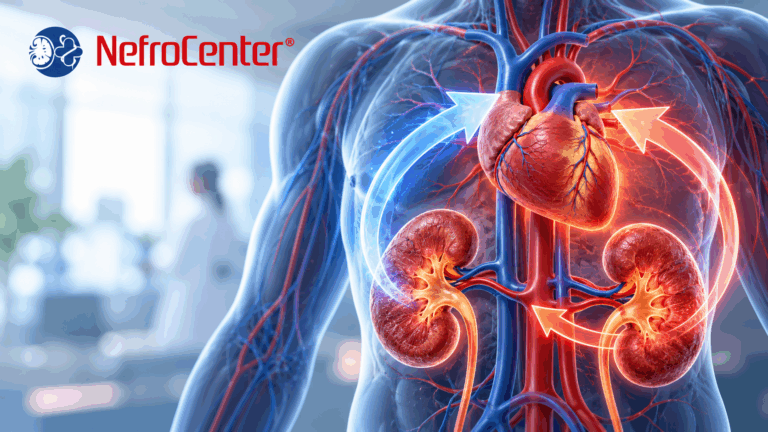
The kidneys, heart, vascular system and clotting mechanisms are closely connected. As kidney disease progresses, the cardiovascular profile, the thrombotic risk and the bleeding risk change and, when hemodialysis is reached, the need to preserve the vascular access over time also comes into play.
For this reason, the dialysis patient should not limit themselves to thinking of the fistula as the place where the needles are inserted during treatment. It is a fundamental component of therapy and must be observed, checked and protected.
At the same time, pain and swelling in a leg, difficulty breathing or chest pain should not automatically be attributed to dialysis or to other conditions already present.
Preventing thrombosis comes precisely from this awareness: knowing your own risk, promptly recognizing the signs that deserve attention and keeping up constant contact with the care team.
The role of the NefroCenter Group in the health of patients with kidney disease and on dialysis
In the care pathway for chronic kidney disease, dialysis is only one part of care.
Clinical monitoring of the patient, control of associated conditions, management of the vascular access and prevention of complications require continuous care.
Within the dialysis centers of the NefroCenter Group, protecting the vascular access and observing the patient’s general condition are part of the nephrology care pathway.
For those who live with dialysis every day, knowing the signs of fistula thrombosis, as well as those of deep vein thrombosis and pulmonary embolism, means becoming an active part of their own safety.
A fistula that suddenly no longer “vibrates,” a leg that swells without an obvious cause or difficulty breathing that appears suddenly are not signs to put off.
The first form of prevention always remains the same: recognize what changes and tell the health professionals who look after you right away.
Frequently asked questions about thrombosis (FAQ)
What are the first symptoms?
Deep vein thrombosis can cause swelling, pain or tenderness, a rise in temperature and a change in color of the affected leg or arm. In some cases, however, it may cause no symptoms.
How can you tell if you have a blood clot in your leg?
Symptoms can raise the suspicion, but they do not allow you to make a diagnosis on your own. If you have sudden swelling and pain, especially if only one limb is affected, a medical evaluation is needed. Venous ultrasound is one of the main tests used in the diagnostic pathway.
Are thrombosis and pulmonary embolism the same thing?
No. In deep vein thrombosis the clot forms in a deep vein. A pulmonary embolism can occur when part of the clot breaks off, reaches the lungs and blocks a pulmonary artery.
What are the symptoms of pulmonary embolism?
Possible symptoms include sudden difficulty breathing, chest pain, a faster heart rate, dizziness or fainting and, in some cases, coughing up blood. If you have symptoms that may fit, you need to seek immediate medical attention.
Do people on dialysis have a higher risk?
Advanced chronic kidney disease is associated with a higher risk of venous thromboembolism, and several factors present in dialysis patients can contribute further to the risk. The assessment must, however, be individual.
What is thrombosis of the dialysis fistula?
It is the partial or complete blockage of the arteriovenous access used for hemodialysis because of the formation of a clot. It is often associated with a stenosis that has gradually reduced blood flow.
How can you tell if a dialysis fistula has closed?
One of the most important signs is the disappearance of the characteristic vibration, or thrill, normally felt over the fistula. Pain or hardening may also appear. If there is a sudden change, you must contact the dialysis center promptly.
Do anticoagulants prevent thrombosis of the fistula?
They should not be used on your own for this purpose. In patients with kidney failure, managing anticoagulant drugs is particularly complex because thrombotic risk and bleeding risk must be balanced. Any therapy must be set by the doctor.