High blood pressure in the fall: how to prevent spikes
High blood pressure in the fall: why the change of season can raise blood pressure and how to prevent hypertensive spikes

High blood pressure in the fall: why the change of season can raise blood pressure and how to prevent hypertensive spikes
As summer ends, it is not only the temperatures, the hours of daylight and our daily habits that change: high blood pressure in the fall can also appear. That is because blood pressure can be affected by the change of season. After the summer months, when heat generally tends to widen the blood vessels, the first cool days can come with a gradual rise in blood pressure readings.
It is not just a perception. Blood pressure shows real seasonal variability: numerous studies have observed values that are on average lower in warm periods and higher in the cold months. Outdoor temperature appears to be one of the main factors involved, and the phenomenon affects both people with normal blood pressure and those who already have hypertension.
This does not mean that September or October automatically cause hypertension, or that every occasional change should be a cause for concern. However, the fall can be a useful time to start checking your blood pressure again, especially if you are already on treatment, are over 65, or live with diabetes, cardiovascular disease or chronic kidney disease.
Why blood pressure can rise when the cold arrives
To understand what happens, we need to start from a very simple mechanism. When it is hot, the body has to release heat and tends to increase blood flow toward the surface of the body through vasodilation. The vessels widen and, in many people, blood pressure tends to drop.
When the temperature falls, the opposite partly happens. To limit heat loss, the peripheral blood vessels tend to narrow. This vasoconstriction increases the resistance that blood meets as it circulates and can contribute to a rise in blood pressure.
The seasonal pattern is fairly recognizable: daytime blood pressure tends to be higher in winter than in summer, and exposure to low temperatures is considered one of the main mechanisms behind this difference.
Fall is the transition period. So there is no identical “September or October effect” for everyone, but as temperatures gradually drop, the rise in readings can begin and then generally becomes more evident during the winter.
The phenomenon is also interesting because it completes what we observe in the preceding months. In summer, in fact, heat can favor episodes of low blood pressure, especially through vasodilation, sweating and fluid loss. In people with hypertension, however, muggy weather, dehydration and changes in the balance of fluids and electrolytes can make blood pressure less stable and harder to manage. The NefroCenter Group has explored both aspects in its articles on low blood pressure in summer and on high blood pressure and heat.
It is not only a matter of temperature
Blaming everything on the thermometer would be too simplistic, though. When people return to their routine, many behaviors often change at the same time.
Vacations end, work commitments increase, more time is spent indoors and, for some people, physical activity decreases. Diet can change too: when temperatures drop, rich dishes, cured meats, aged cheeses, preserved foods and ready-made meals return to the table more often, and all of these can contain significant amounts of salt.
On top of this come sleep, stress, alcohol consumption, weight gain and less physical movement. None of these factors, taken individually, necessarily explains a rise in blood pressure, but their combination can make it harder to keep hypertension well controlled.
The change of season should therefore be seen as a moment when environment, body and lifestyle meet.
High blood pressure in the fall: it often causes no symptoms
One of the most common mistakes is waiting for headaches, dizziness or palpitations before deciding to measure blood pressure.
Hypertension is often silent. A person can have high readings without noticing any particular problem. Even symptoms such as headache, tiredness or lightheadedness, when present, are not very specific and cannot on their own tell you whether blood pressure is high.
For this reason, the arrival of fall can be a good opportunity to get back to a simple habit: measuring your blood pressure correctly at home, especially if you already have hypertension.
The evidence on seasonal variability points to home blood pressure monitoring as one of the most useful tools for following blood pressure over the course of the year. A single isolated reading says little; a series of correctly collected readings can instead give your doctor much more useful information.
It is important to measure after a few minutes of rest, seated, with your arm supported and using a reliable device with a cuff of the appropriate size. If your readings are repeatedly higher than your usual pattern, it is advisable to talk to your doctor.
Blood pressure medication should not be changed on your own
This point is particularly important for those who recorded lower readings during the summer.
In the heat, some patients on blood pressure medication may experience a significant drop in blood pressure. In certain circumstances, the doctor may therefore decide to temporarily review the treatment. When the cool weather arrives, however, the situation can change again.
Seasonal variability is significant enough to have been the subject of specific scientific recommendations for managing treated patients with hypertension.
This does not mean automatically changing medications with every change of season. It means exactly the opposite: avoiding do-it-yourself changes.
You should not restart a dose that was stopped, increase a tablet or reduce a diuretic on the basis of a few home readings without talking to your doctor. Age, kidney function, other illnesses, the medications you take and the trend in your readings must be assessed together.
Salt and blood pressure: in the fall, watch the habits that return to the table
When we talk about preventing blood pressure spikes, diet plays an important role, and salt deserves particular attention.
The problem is not only the salt added from the shaker. A significant share of the sodium we take in can come from processed and preserved foods: cured meats, cheeses, snacks, baked goods, sauces, ready-made meals and some packaged foods.
Cutting down on salt does not necessarily mean eating bland food. Herbs, spices, lemon and other flavorings can help you gradually get used to less salty cooking.
A diet rich in vegetables, legumes, whole grains and minimally processed foods can fit into a pattern that is good for cardiovascular health. Fruits and vegetables also provide potassium, but an especially important clarification is needed here for patients: people with chronic kidney disease should not increase their potassium intake on their own, because in some conditions the kidneys’ ability to eliminate it may be reduced. Diet therefore needs to be adapted to kidney function and to your specialist’s advice.
The same principle applies to fluids: “drinking a lot” is not a universal prescription. In patients with advanced kidney failure, on dialysis, or with some forms of heart failure, the appropriate amount must be set by the treating team.
Exercise, weight and sleep: prevention continues even as the days get shorter
Fall should not mean giving up physical activity. Walking, cycling or doing an activity compatible with your clinical condition helps the cardiovascular system and contributes to controlling weight, blood sugar and blood pressure.
Regularity matters more than occasional bursts. There is no need to cram everything into the weekend: building exercise into your daily routine makes it easier to keep up over time.
Sleep also deserves attention. Sleeping poorly, getting too little sleep and living with disorders such as obstructive sleep apnea can be associated with harder blood pressure control. Fall can therefore become an opportunity to look at cardiovascular health in a broader way: blood pressure, diet, physical activity, weight, sleep, stress and smoking are not separate compartments.
High blood pressure and the kidneys: why control becomes even more important
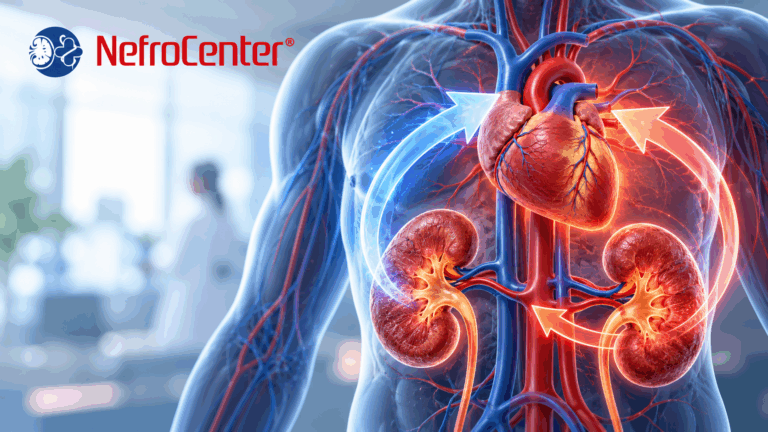
NefroCenter pays particular attention to hypertension because the relationship between high blood pressure and the kidneys works in both directions.
The kidneys take part in regulating blood pressure by controlling water and sodium and through complex hormonal systems. At the same time, persistently high blood pressure can gradually damage the small blood vessels of the kidneys and contribute to the loss of kidney function.
A vicious circle can thus set in: hypertension damages the kidney, and impaired kidney function can make blood pressure control even harder. This relationship is explored in depth in the article High blood pressure and the kidneys: the risks of hypertension.
For people with hypertension, diabetes or other risk factors, the doctor may consider it advisable to also check kidney function through tests such as serum creatinine with an estimated glomerular filtration rate (eGFR) and a urine evaluation, including albuminuria when indicated.
When readings need attention
An occasional rise in blood pressure is not automatically a diagnosis of hypertension. Stress, exercise just completed, pain, caffeine and even a poorly performed measurement can temporarily affect the result.
The situation is different with repeatedly high readings, especially in a person who already has hypertension or cardiovascular and kidney disease. In this situation, it is advisable to show your doctor your blood pressure log, without necessarily waiting for symptoms to appear.
Very high readings accompanied by chest pain, difficulty breathing, neurological deficits, confusion, sudden changes in vision or other significant symptoms, on the other hand, require urgent medical evaluation.
From summer to fall: getting to know your own blood pressure
Blood pressure is not a fixed number. It changes over the course of the day and can vary with age, physical activity, emotions, sleep, diet, medications and outdoor temperature. The seasons are part of this balance too.
In summer, heat can favor vasodilation and low blood pressure; on muggy days, however, dehydration and fluid loss can also make the management of hypertension more complicated. With the arrival of fall and the gradual drop in temperatures, vasoconstriction can instead favor a rise in readings, which tends to become more evident in the cold months.
The message, therefore, is not to be afraid of the change of season, but to use it as a prevention reminder.
Measuring your blood pressure correctly, cutting down on salt, staying active, maintaining a healthy weight, not smoking and taking prescribed treatments regularly are behaviors that count all twelve months of the year. For those who already have hypertension, kidney disease, diabetes or cardiovascular conditions, fall can be the right time to check with your doctor that your readings are still adequately controlled.
Because protecting your blood pressure means protecting your heart, brain, blood vessels and kidneys at the same time.