Pancreatic cancer: causes, symptoms and treatment
Pancreatic cancer develops in the upper abdomen, behind the stomach. The pancreas is a vital organ.
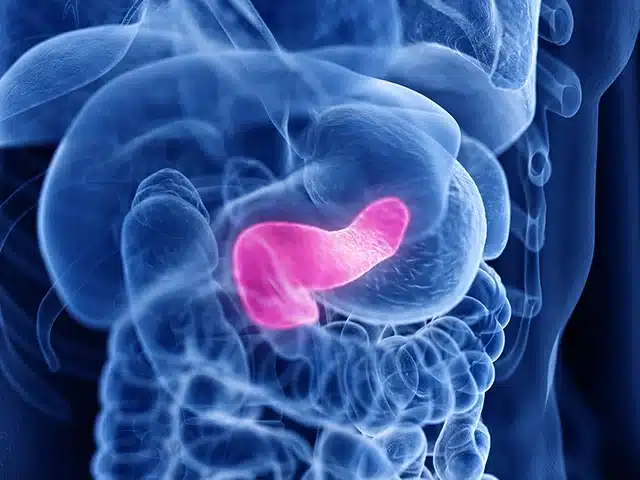
Pancreatic cancer develops in the upper part of the abdomen, behind the stomach. The pancreas is a vital organ located in the upper abdomen. It has an elongated, flattened shape, similar to a pear. The function of the pancreas is essential, because it plays a key role in digestion and in controlling blood sugar levels.
Pancreatic cancer is aggressive in nature
According to statistics, pancreatic cancer is less common than other types of cancer. Nevertheless, it is particularly aggressive and is often diagnosed at an advanced stage because of its silent symptoms, which makes the prognosis less favorable according to specialists. Thanks to the equipment available at the NefroCenter Group facilities and the professionalism of the specialists, an accurate diagnosis is possible.
Causes
At present it is difficult to define the causes of pancreatic cancer precisely. A combination of genetic and environmental factors that can influence its development may lie behind it.
Risk factors
There are several risk factors that can lead to cancer of the pancreas. The main risk factors include:
- Smoking. Cigarette smoking is considered the main risk factor, and heavy smokers in particular are at greater risk.
- Diabetes. People with type 2 diabetes are another at-risk group.
- Chronic pancreatitis. Chronic inflammation of the pancreas, which causes various symptoms in the patient, can increase the risk of developing a tumor.
- Obesity. Excess body weight is associated with an increased risk of several types of cancer. Pancreatic cancer is among them.
- Age. One of the risk factors can be age. Indeed, the proportion of people affected has already exceeded 60 years.
- Sex. According to statistics, men seem to be slightly more affected than women.
- Heredity. A family history of pancreatic cancer can increase the risk.
Symptoms
The symptoms of pancreatic cancer are often nonspecific. They may appear only when the disease is at an advanced stage, making diagnosis difficult. For this reason, undergoing diagnostic tests for prevention can be an important factor. The most common symptoms include:
- Abdominal pain. If there is persistent, intense pain, it is advisable to get checked. The pain is located in the upper abdomen and in some cases can also radiate to the back.
- Weight loss. This is when there is significant, unintentional weight loss despite keeping your eating habits unchanged.
- Jaundice. Pancreatic cancer can also show up as a yellowing of the skin and eyes caused by obstruction of the bile ducts.
- Nausea and vomiting. This can be caused by obstruction of the pancreatic ducts.
- Diarrhea or constipation: A change in bowel habits can cause irregular bowel movements.
- Loss of appetite. Unexpectedly there is a loss of appetite, even in front of foods that are on the list of favorites.
- Diabetes. Besides being a consequence, pancreatic cancer can also be a cause of the onset of diabetes.
Diagnosis
To make a diagnosis, it is advisable to undergo several types of tests, which can be done at the facilities of the Nefrocenter group and at the NefrocenterLab laboratories. If the doctor has suspicions, they may order:
- Blood tests. The values can be used to assess liver and pancreatic function.
- Ultrasound. The test uses ultrasound waves to visualize the internal organs.
- Computed tomography (CT). Needed to produce detailed images of the internal organs.
- Magnetic resonance imaging (MRI). A magnetic field is used to create detailed images of the internal organs.
- Endoscopic retrograde cholangiopancreatography (ERCP). This is a procedure that makes it possible to visualize the bile and pancreatic ducts.
- Biopsy. Histological examination of a tissue sample taken from the tumor is the only way to definitively confirm the diagnosis.
Treatment
Once pancreatic cancer has been confirmed, the specialist has several options, to be evaluated based on the stage of the disease, the patient’s general condition and the presence of other diseases. The main therapies include:
- Surgery. Surgery is the only possibility of a radical cure for early-stage tumors.
- Chemotherapy. It is used to kill cancer cells and slow tumor growth.
- Radiation therapy. It is used to destroy cancer cells using high-energy radiation.
- Biological therapies. These are therapies that use the immune system to fight the tumor.