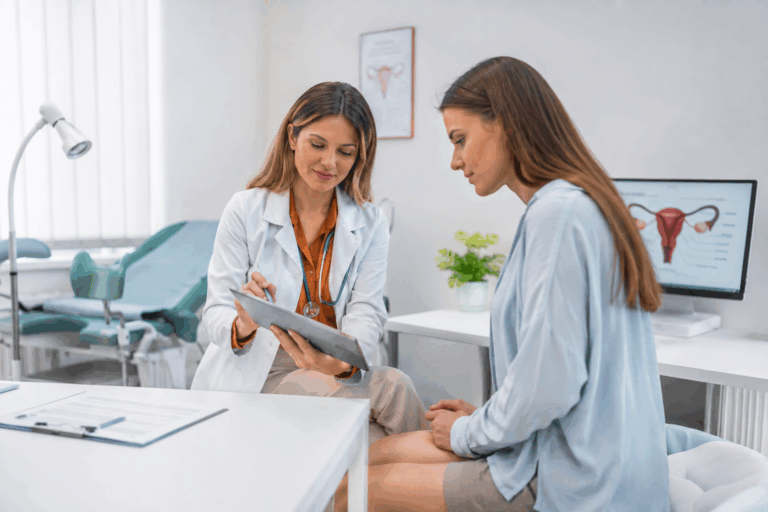
Endometriosis: symptoms, treatment and the diet to follow
Endometriosis is a medical condition that occurs when the endometrium ends up outside the uterus.

Endometriosis is a medical condition that occurs when the endometrium is outside the uterus. The endometrium, in fact, is a mucous membrane that lines the uterine cavity. This condition can occur from the very first period, called menarche (named after Mena, the protective goddess of the physiological cycle), and can be present until menopause. In Italy it is estimated to affect 3 million women of childbearing age and to have a negative impact on their quality of life. It is a chronic and disabling disease that only regresses with menopause if it is not treated with medication or, in the most serious cases, with surgery.
The symptoms of endometriosis
The condition can show up with different symptoms, which may also occur together. Pelvic pain appears especially in the peri-menstrual phase, which essentially begins 5 days before the flow. Pain during sexual intercourse, on the other hand, peaks both before and after the cycle. Vaginal bleeding may also occur on days when there is no menstruation, and in some cases the pain can also extend to bowel movements. The symptoms are:
- Pain during bowel movements
- Painful sexual intercourse
- Pelvic pain
- Irregular menstrual cycle
- Painful periods
- Infertility
What happens with endometriosis
Women who are affected by this condition have a higher likelihood of developing endometriotic cysts, scars or adhesions. Endometriosis is also behind some conditions of infertility, lowering a woman’s chances of conceiving. If the endometrium reaches the ovaries, it can also increase the risk of developing cancer by 3%.
How endometriosis is treated
One of the most widely used techniques is laparoscopy. At the Rome American Hospital of the NefroCenter group it is possible to have checkups and tests in the gynecology medical area. The specialists, who are experienced in treating endometriosis, can establish a medical pathway through which women affected by this condition can improve their quality of life. At RAH, great importance is also given to women’s sexual health, and women can turn to the hospital in the capital for other problems unrelated to endometriosis as well. They can even decide to reconstruct the G-spot to regain a more fulfilling sex life with their partner. Some women, on the other hand, may decide to undergo surgery in order to become pregnant if all drug therapies have failed.
Why the disease develops
The most plausible hypothesis for women who develop endometriosis is the transfer of fragments of endometrium from the uterus to the fallopian tubes. The pain, which can be quite pronounced, is also felt when the mucous membrane reaches the abdomen, settling on the peritoneum and on the surface of the pelvic organs, that is, the ovaries and, again, the peritoneum. It rarely spreads to the liver, diaphragm and pleura.
When it begins
Endometriosis is basically asymptomatic. It becomes symptomatic when it shows up as pelvic pain in the peri-menstrual phase, affecting the lower abdomen below the navel, with dysmenorrhea (painful periods) and dyspareunia (painful sexual intercourse). When women have painful periods, usually a few years after menarche, they should see a gynecologist. The pain, however, can also appear with the very first period.
Tests
When the specialist suspects that a woman may have endometriosis, they may order diagnostic tests. The gynecologist must check for any endometriotic nodules on the ovaries by requesting a pelvic ultrasound or a transvaginal one. Blood chemistry tests, carried out by diagnostic laboratories, may also be requested. Through a blood test, CA-125 is studied, a tumor marker whose levels rise when endometrium is present outside the uterine cavity, even when there is no tumor. This does not mean that cancer will develop, so it is a test that can be approached calmly, even psychologically, because the rise in values is normal.
Making love
Sexual intercourse can be very painful for women with endometriosis, particularly in the pre- and post-menstrual period. For this reason, gynecologists recommend using lubricants that make penetration easier. The routine use of painkillers, on the other hand, is not recommended, also because, depending on the patient’s sex life, medication could be overused, with contraindications that can be significant for other organs.
Having children
According to the Veronesi Foundation, which has carried out studies on endometriosis, infertility can also be addressed with a path in which women decide to begin their journey into motherhood earlier, that is, at a young age. A technique that was also used in antiquity. This increases the time available, reducing the chances of failure. However, endometriosis does not always cause infertility.
Diet
Diet can help when endometriosis is present. Basically, estrogenic foods should be avoided and, as a result, anti-estrogenic ones increased, just as pro-inflammatory foods should be avoided and anti-inflammatory ones favored. It is advisable not to eat these foods:
- Alcohol
- Oats
- Sugary drinks
- Coffee or caffeinated drinks
- Packaged processed foods
- Unchecked dairy products that may have high hormone levels
- Very sugary sweets
- Refined flour and baked goods
- Saturated fats
- Rye
- Soy and derivatives rich in phytoestrogens
- White sugar
The discovery of the disease
The first medical texts with similarities to present-day endometriosis date back a full 4,000 years. In fact, the Hippocratic Corpus of the 4th century BC speaks of uterine ulcerations, adhesions and infertility, all symptoms of what we know today as endometriosis, a name given in an article by John Simpson in 1925. The discovery of the present-day disease, however, was made by Karl von Rokitansky in 1860.
Antiquity and endometriosis
The physicians of the Hippocratic school, in fact, conducted studies on infertility. Women who had dysmenorrhea, that is, menstrual pain, were thus encouraged to marry very young and have children. The same physicians spoke of changes in marriage practices. In antiquity, ignorance and legends made life impossible for women with endometriosis. In fact, the treatment given by physicians consisted of the use of leeches, but they also resorted to bloodletting, straitjackets and genital mutilation. In the most serious cases, women were ordered to be killed because they were believed to be possessed by the devil.
The disease in the Middle Ages
In the Middle Ages, women with this condition were once again considered mad, immoral, hysterical and even prostitutes, because pelvic pain was associated with mental illness. All this caused a delay in the diagnosis of what we now call endometriosis, and influenced physicians considerably until two centuries ago. This resulted in silent suffering for women, who feared being pointed at.